Four Favourites: June
by Rachel Gambling
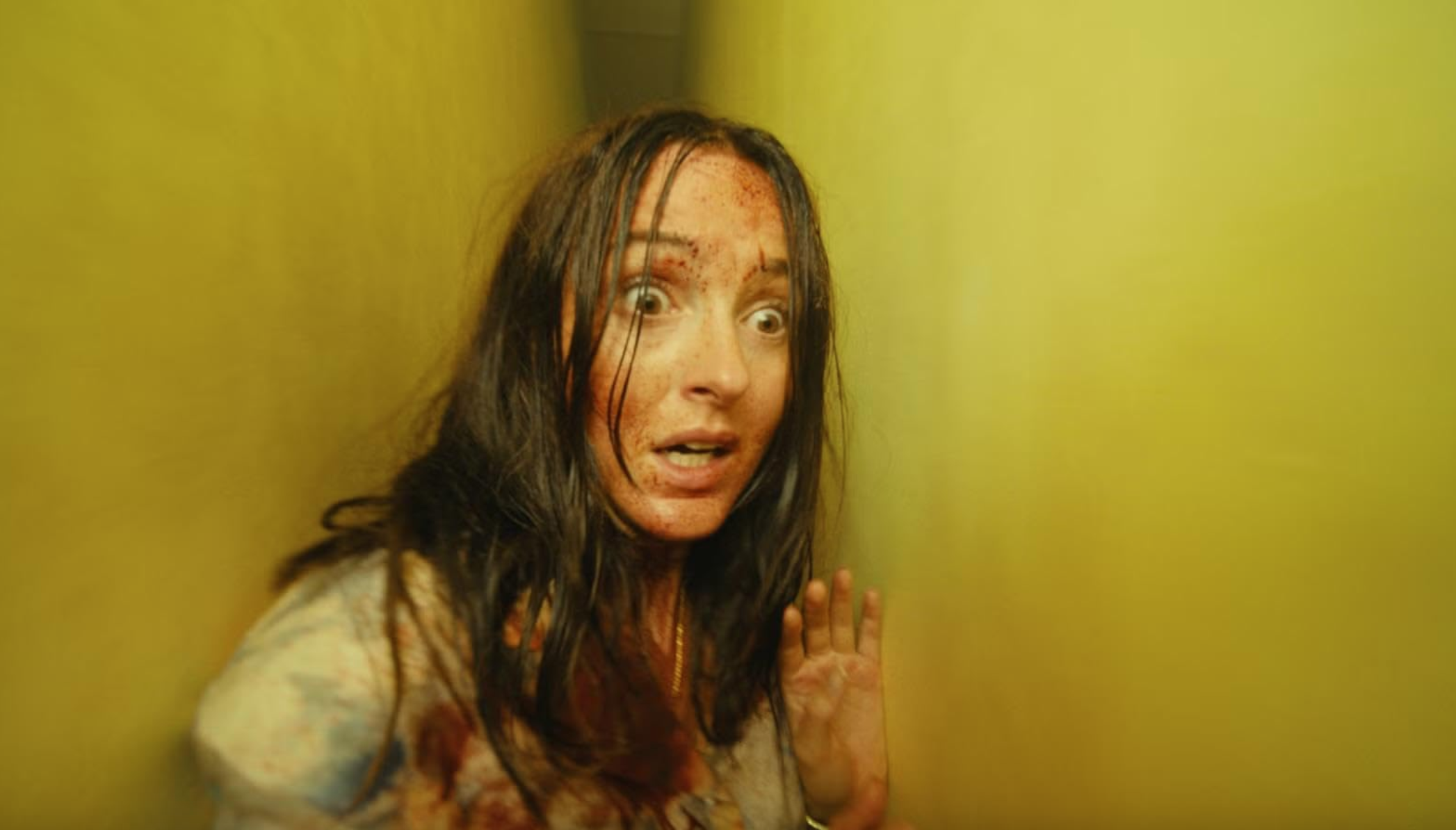
Renate Reinsve in Backrooms (2026)
This article contains minor spoilers.
Die My Love (2025)
****1/2
Director: Lynne Ramsay
Writers: Lynne Ramsay; Enda Walsh; Alice Birch
Based on: Die My Love by Ariana Harwciz
Starring: Jennifer Lawrence as Grace; Robert Pattinson as Jackson; Sissy Spacek as Pam; LaKeith Stanfield as Karl
In the blistering heat of Montana, a young couple, Grace and Jackson, move into the home of Jackson's deceased uncle. After the birth of their son, Grace is isolated in their rural home, unable to progress her writing. Soon, she becomes suspicious that Jackson is sleeping with other women. As her behaviour becomes increasingly erratic and violent, Jackson's mother, Pam, attempts to support Grace, but the tendrils of her psychosis have rooted itself into her psyche.
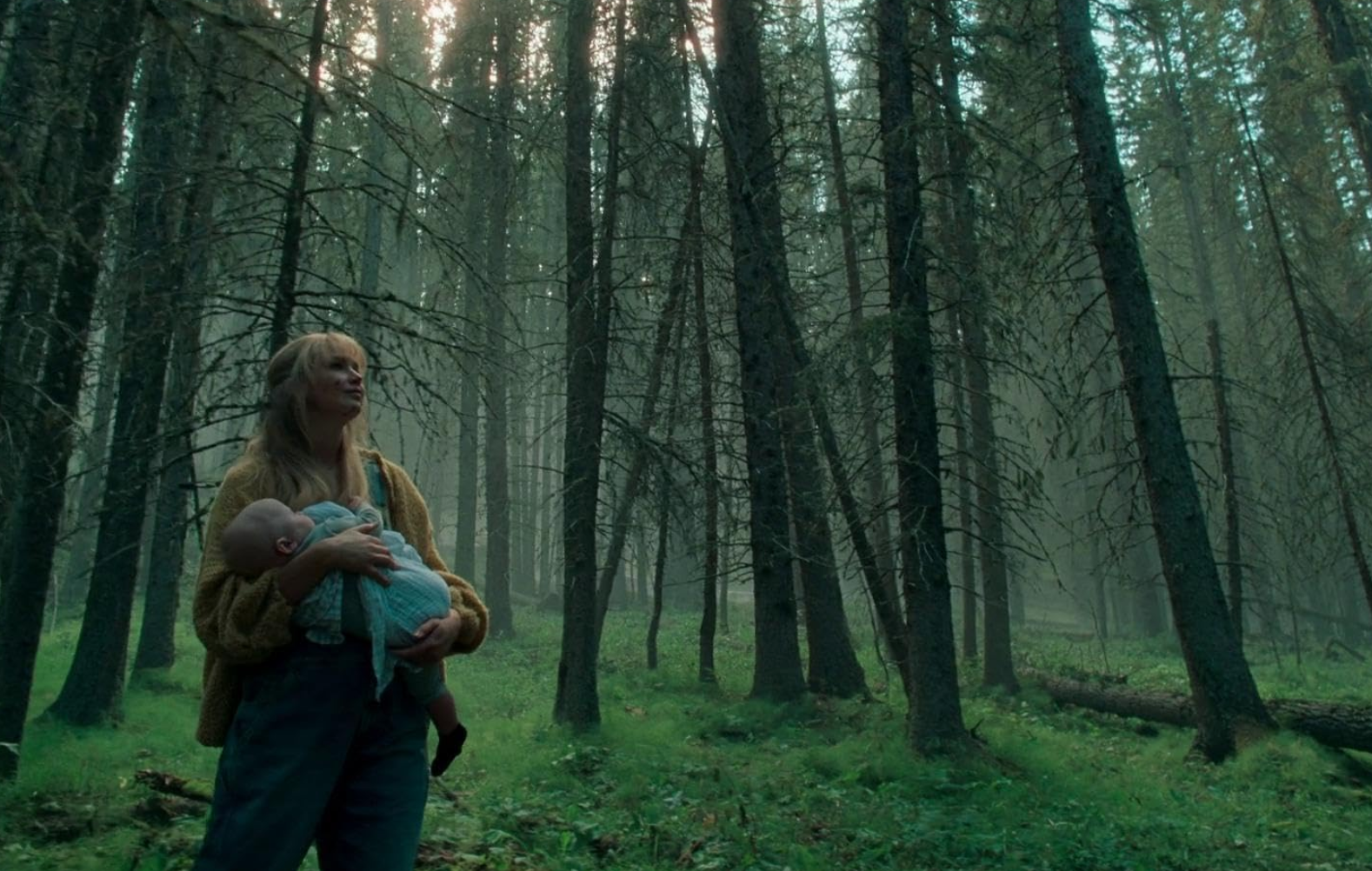
Jennifer Lawrence in Die My Love (2025)
Die My Love is a disjointed, sticky, and instinctive drama about the sobering actualities of post-partum mental health. In the UK, post-partum psychosis affects around one in 1,000 women. Whilst Die My Love is an arthouse film that explores mental health issues beyond this condition, viewers with experience of PP could see themselves reflected in Lawrence's performance:
It was reassuring that there is never any question of Grace’s love and attachment with her son, it is everyone and everything else that she seems to no longer relate to and detaches from.
Neither Grace nor Jackson are portrayed as the antagonist. The couple are battling with a condition that distorts reality. As we watch on, we sense that the film's narration is challenging our understanding of reality, too. Each scene is cut sharply from the other, drawing into question whether the storytelling is linear. Long, unexpected ellipses are used throughout, with dimly lit scenes at night contrasted alongside the blindingly bright daytime. We ourselves are living Grace's experience, whilst sympathising with the unwavering dedication Jackson has for his wife and son's wellbeing.
Backrooms (2026)
****1/2
Director: Kane Parsons
Writer: Will Soodik
Based on: Backrooms by Kane Parsons
Starring: Chiwetel Ejiofor as Clark; Renate Reinsve as Dr. Mary Kline; Mark Duplass as Phil; Finn Bennett as Bobby; Lukita Maxwell as Kat
Clark, a furniture store owner, repeatedly relays the night his ex-wife kicked him out of their home with his therapist, Mary. Now living and drinking heavily in his store, he discovers a portal to a liminal dimension: a never-ending series of offices containing uncanny entities. When Clark and his staff go missing, Mary seeks answers; what she discovers is the distorted and disturbing truth behind why his wife left him.
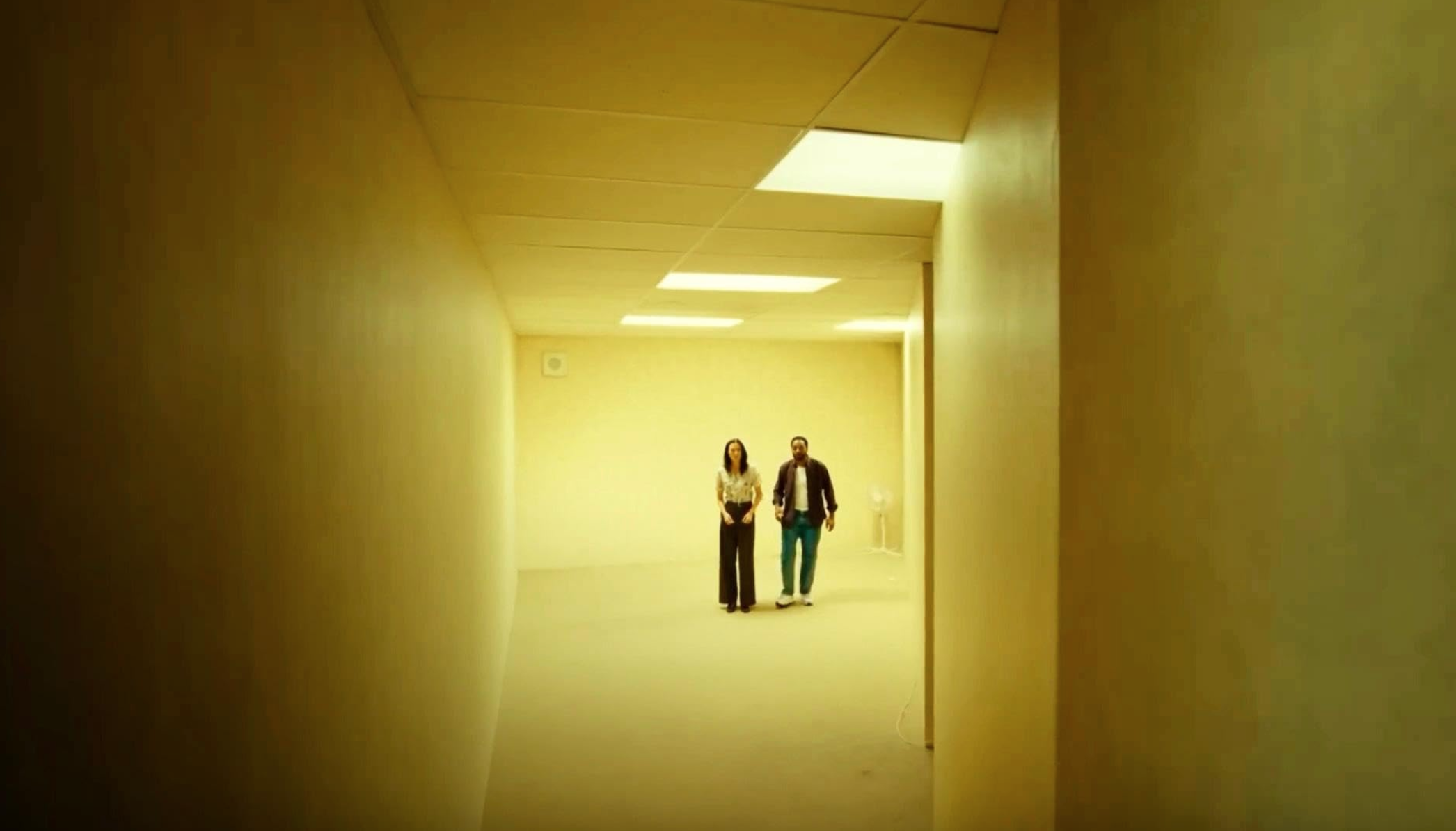
Renate Reinsve and Chiwetel Ejiofor in Backrooms (2026)
Backrooms covers an impressive scope of complex themes, most notably regarding domestic violence and artificial intelligence. Firstly, we have Clark, a character ruminating upon a traumatic moment from his past and failing to progress beyond this. Then, we have the malformed figures inhabiting the parallel dimension, reflecting back the memories of those who enter. Its ending leaves us with just as many questions as its beginning.
Theories have spawned from the film's viewers regarding the significance of each character, most interestingly regarding their experiences of race, memory, and trauma, and how the repetitive and eerie setting of the backrooms acts as a representation of AI's inability to reproduce an accurate likeness of reality. TikTok creator Reel Takes notes that
one of the first things [Clark] sees in the backrooms is a pile of furniture without that human touch. Despite the backrooms trying hard to replicate a variety of universal people, places, and things, it never gets anything quite right.
With Kane Parson's openly anti-AI stance, it's intriguing to see how a character like Clark associates comfort with a disingenuously nostalgic setting such as the backrooms, and what this could further imply about the dangers of unregulated AI.
Faces of Death (2026)
****
Director: Daniel Goldhaber
Writer: Isa Mazzei; Daniel Goldhaber
Based on: Faces of Death by Gorgon Video
Starring: Barbie Ferreira as Margot; Dacre Montgomery as Arthur; Josie Totah as Samantha; Aaron Holliday as Ryan
A social media moderator, Margot, is unable to escape an embarrassing and unsettling viral video from her past. At work, she attempts to move on from her life-altering mistake but is fixated on a series of extreme videos depicting people dying. Through her own investigation, she realises two things: that the killings resemble those of a 1970s snuff film called Faces of Death, and that the people being murdered are listed as recent missing persons.
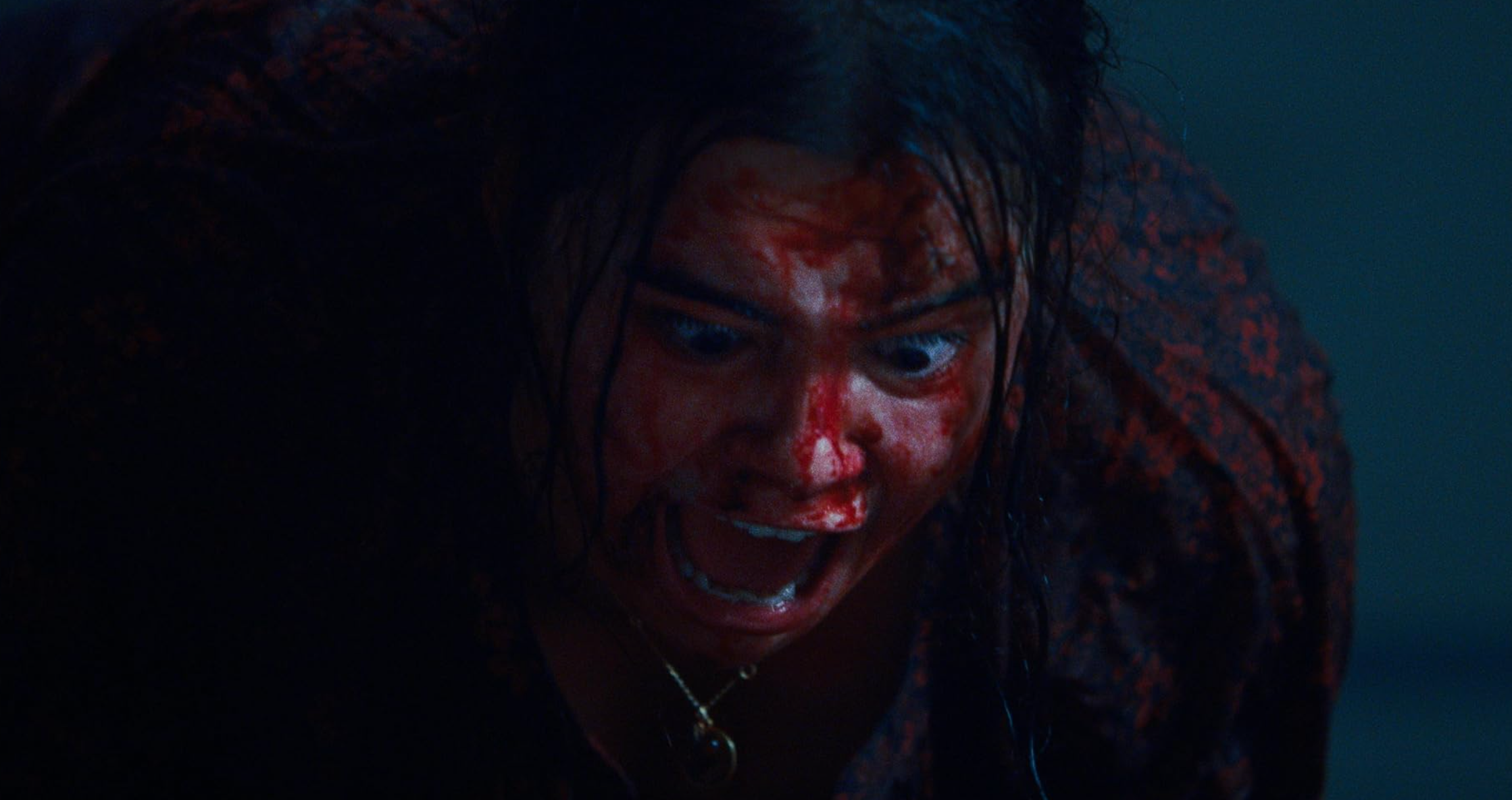
Barbie Ferreira in Faces of Death (2026)
Faces of Death comes a year after the release of American Sweatshop (known by the title Clickbait in some regions) with more gore and a more cohesive plot. Whilst American Sweatshop focused more on themes of employee rights and sexual violence, Faces of Death nods to the 1978 Mondo film of the same name. The original contained a series of death scenes, most of which were fake, but some, including a plane crash, a slaughterhouse, and a suicide jumper, were real archival footage.
In an era of internet virality, Faces of Death uses its source material as a baseline for discussion of an attention economy. The lead antagonist of the film, Arthur, is played with a smarmy quality not dissimilar to Bonnie Blue. Unphased by the impact of his quest for infamy, he revels in the distress his content causes Margot. Margot, no stranger to online scandal, has her past vapidity used against her as an example of her hypocrisy. Faces of Death seeks to question the internet's unforgiving morality and provides an extreme solution as to how one might vindicate themselves.
Revenge (2017)
****
Director: Coralie Fargeat
Writer: Coralie Fargeat
Starring: Matilda Lutz as Jen; Kevin Janssens as Richard; Vincent Colombe as Stan; Guillaume Bouchède as Dimitri
A married man, Richard, brings his mistress, Jen, for a romantic getaway in the desert. The trip is interrupted by Richard's friends Stan and Dimitri, who arrive early for a hunting trip. When the four party together, Jen gives Stan a drunken lap dance; feeling she owes him more, he sexually assaults her the next morning. Jen, seeking help from Richard, is rejected and left for dead after being pushed from a cliff; but Jen finds herself revived and seeks bloody justice for herself.
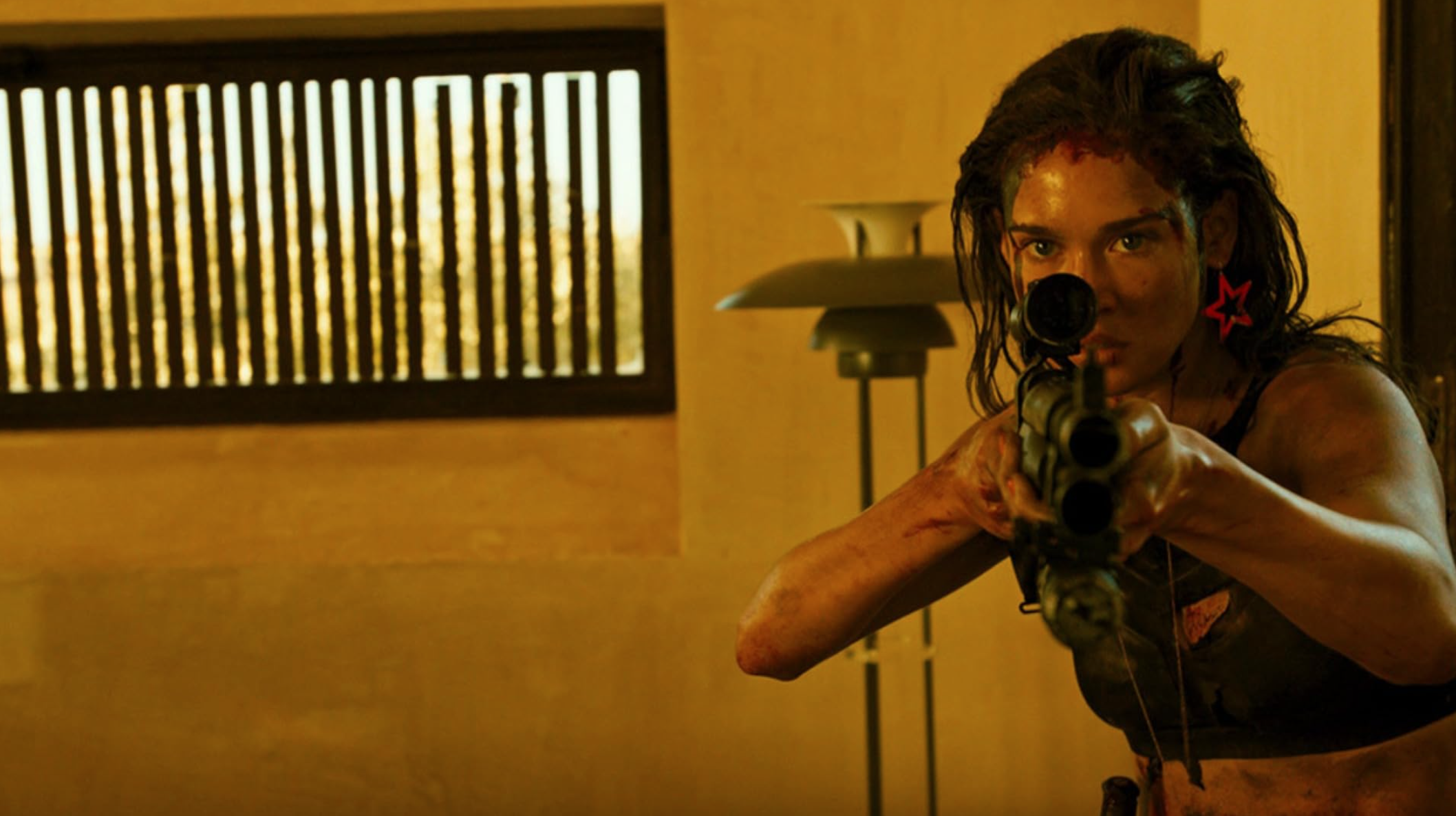
Matilda Lutz in Revenge (2017)
A refreshing take on a controversial subgenre, Revenge is the feature film debut from The Substance director Coralie Fargeat. Whilst some rape-revenge movies spend their time emphasising the brutality of sexual assault through extended, sometimes sexualised scenes, Revenge asserts its point concisely and moves onto the more interesting part: retribution.
Fargeat uses a similar surrealist quality in Revenge to that within The Substance. We see Jen rise from the dead to hunt down her perpetrators in a reverse game of cat-and-mouse, in the same fashion as Samara Weaving in Ready or Not. The sparse, dusty climate surrounding Jen amps up her need for resourcefulness, challenging preconceptions of her character viewers may have developed during the opening act. Camera angles that parody female objectification are used, a common device within Fargeat's films, and then later subverted with spectacular pictures of gratuitous, empowering violence. The point of Revenge is not so much about groundbreaking plot structure, but more so a reclamation of a genre often misunderstood by the male gaze.


Rachel Gambling is a writer and poet from Southend-on-Sea, UK. She has a lot of thoughts on some things. She is the Founder and Editor-in-Chief of girlblog! a Riot Grrrl arts and culture webzine providing an intersectional perspective on film, TV, music, and lifestyle.
Her poetry has been published in T'Art, Queerlings, Where the Land Forgets Itself, and Kamena, and her self-published pamphlet, Cape Point, was part of the 2025 Estuary Anthology. She has written content for Cliterally the Best, Brook, JustWatch, and The Socialist.