
by Alex Stevenson

Hudson Williams and Connor Storie in Heated Rivalry
It’s been a good time to be a Canadian living abroad. Our Prime Minister, Mark Carney, is making headlines for his sanity, our ex-Prime Minister is dating an international pop star, the Winter Olympics just took place, and of course there is the mammoth phenomenon that is Heated Rivalry (a show I will take partial credit for as my tax dollars, Crave subscription, and cellphone bills contributed to the pool of funding it received). While I am weary about the positive reputation we are granting hockey boys, I am, on the whole, a fan of how positively the show has been received. The Canadian arts scene is often overlooked, and when a show does make it out, it's seldom recognised as a Canadian production. I’ve lost count of the number of times I’ve shocked people by telling them that shows such as Kim’s Convenience and Schitts’ Creek were originally produced by the CBC (Canadian Broadcasting Corporation), or artists such as The Weeknd and Joni Mitchell (who grew up in my hometown) got their start due to the fierce broadcast regulations across the country that ensure Canadian artists get airtime. Yet, as media consumption becomes increasingly streaming based, Canadian productions are getting continually swept under the rug or forced to comply with more American cultural blueprints in order to succeed, even domestically. It hasn’t always been this way, and I’m interested in exploring both what Canadians used to do to promote art in the ‘True North’ and how we’re promoting it now.
Before there was television, there was the radio, and with it, strict regulation on broadcast content was introduced with the intention of halting American cultural imperialism. The Broadcasting Act, introduced in 1932 created a nationalised radio service with a minimum requirement of 60% Canadian produced content. As the media landscape in Canada changed, from the age of radio to the television stars, the CRBC became the CBC, and the Broadcasting Act developed further. Canadian cities near the border made up 90% of the population, and were able to tap into American airwaves, streaming programs such as the Ed Sullivan Show and channels like NBC and ABC were the only things available on the millions of televisions that had flooded the market in the 1950s. While this content was popular, it failed to capture one crucial market: the Quebecois.
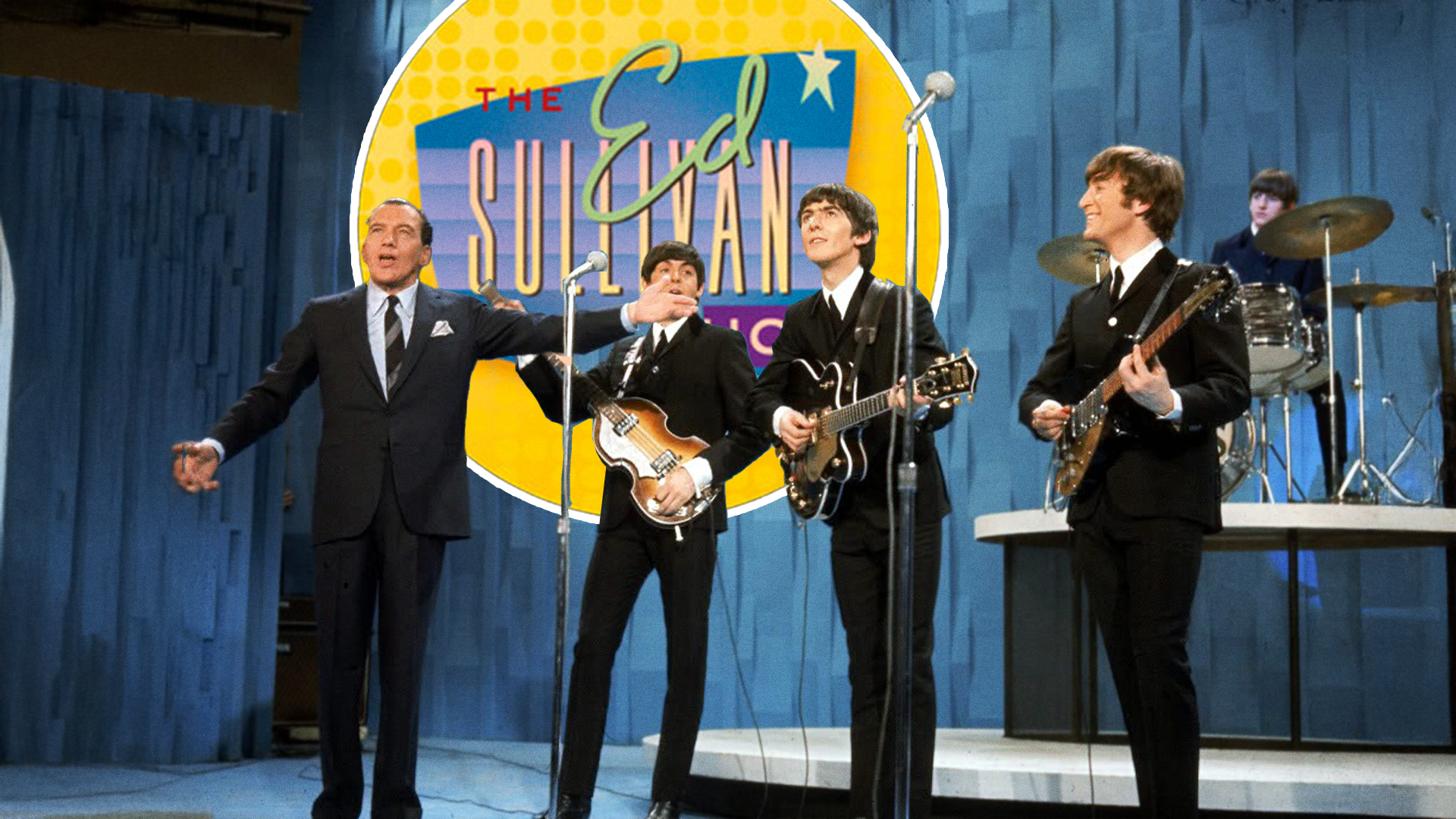
The Beatles on The Ed Sullivan Show
A brief interlude here to explain Quebec, to those who only know about the province from Heated Rivalry. Quebec is the French speaking part of Canada, the area originally settled by the French fur traders in the 19th century. After the Battle of the Plains of Abraham, the French ceded the province to the British. In a move that broke from traditional imperial behaviour, the Brits allowed the Francophone settlers to maintain their French language and identity, leading to Canada’s multilingual government. Today, the Quebecois remain one of the most powerful voter interest blocs, with more MPs per capita than anywhere else in the country, more money, and more protective legislation as well as the most distinct cultural interests in the nation.
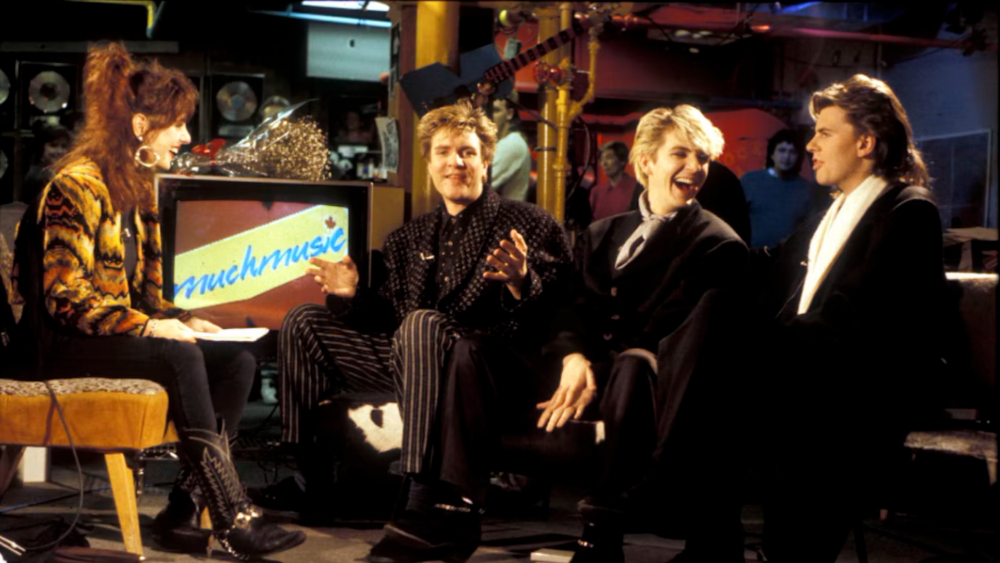
The lack of Francophone content resulted in the government funding the development of French-Canadian content, despite television programs being defunded entirely during the Second World War. The productions proved so popular that soon, the CBC was nationalised, uniting with the CRBC (Canadian Radio Broadcasting Corporation). Quickly, the CBC spread across the country, with no competition creating shows that spoke to the Canadian experience. In the 1960s, under Prime Minister John G. Diefenbaker, secondary stations such as City-TV popped up with the intention of speaking to more localised audiences than the CBC, a trend that continued until the 1990s. Stations such as MuchMusic, the Canadian answer to MTV and Top of the Pops found success in challenging American and European competitors by highlighting just how domestic its scope was. In this ad, the presenter discusses “the Nation’s rock” and artists such as Bryan Adams, a mainstay of Canadiana. Sarah Black McCulloch attributed the rise to the combination of strict broadcasting regulations that limited access to international channels and the willingness of Canadian broadcasters to launch and relaunch channels and programs with little concern for international reach or for format.
When, as a result of significant changes to the laws surrounding crown corporations and monopolies, the stations began to rapidly merge, leaving Canada with four major producers (CTV, Global, CBC, and Bell Media), the nation was left with a relatively small, but relatively well protected production industry. While this spelled the end for many channels like MuchMusic, who profited off of the freedom to try and try again that the CanCon broadcasting regulations and the polity of channels available to work with offered, Canada still had an ironclad media industry. Everything produced in Canada had to have an audience as Canadians were left with little other choice, and distinct visual and cultural languages remained within this miniscule ecosystem. Where Britain’s television has been characterised by cerebral comedy, long running soap operas, and murder mysteries set in the Scottish Highlands, Canada has dramatic Westerns set in Alberta, period pieces set in Ontario, and comedies set in Montreal and Vancouver with a focus on regional humour and the majesty of a largely unsettled country. While this still remains true to a certain extent, the advent of streaming once again forced a change in the methodology of Canadian content creators who could now more easily sell their product abroad.
This can be most clearly seen in the case of Heated Rivalry, a show originally pitched to HBO. Creator Jacob Tierney who is responsible for the cult classics of Letterkenny and Shoresy, originally offered his adaptation of Rachel Reid’s Game Changers series to American production companies, with the intention of obtaining a larger budget. When American streaming mammoths like HBO insisted on limiting Tierney’s distinctive style in favour of something viewed as more marketable to an American audience, Tierney took the project back to Canada, causing Crave and Bell Media to serve as the primary producers. While this turned out to be a missed opportunity on the part of HBO, the case of Heated Rivalry reveals that Canadian media maintains a distinctive tonal difference from other productions despite the globalised market.

Heated Rivalry
Today, Canadian television, much like the rest of the Canadian economy, is an oligopoly that is being slowly encroached upon by the United States. Organisations such as Bell Media, the telecommunications behemoth are behind a number of the most successful shows in the country including The Borgias, Orphan Black, and of course Heated Rivalry. Shows such as Heated Rivalry are deeply Canadian, from the source material (written by Halifax based Rachel Reid), to the production companies Crave, Bell Media, the Government of Quebec, and the Government of Canada, or the very plot centering in and around Montreal and a fictionalised version of the NHL. But with shows like The Borgias, the connection to the Canadian experience becomes less clear. While actors like Montreal born Francois Arnaud are often a good hint, Canadian media today has gone global.
Living abroad, I often find myself grasping for tastes of home. There is something distinctly comforting about getting to share my love for something Canadian with people outside the country, it really does feel like the best of both worlds. As CanCon falls by the wayside, I truly hope Canadian cultural media remains.
A brief addendum: if you have an interest at all in learning more about the particulars of Canadian media and its distinct sonic and visual language, I highly recommend the podcast Big in Canada for more deep dives.

Alex Stevenson (she/they) is a Canadian-born campaigner and student fascinated with the world. Primarily an essayist, she has a background in politics and film.
They are currently completing their undergraduate studies in History and Political Economics at King’s College London with an eye towards further study. With experience working in the film festival circuits, grassroots campaign organising, and the publication of independent media they enjoy exploring the impact of media on the political landscape centring on themes of resistance, community, and history.