
By Tenai Palomino
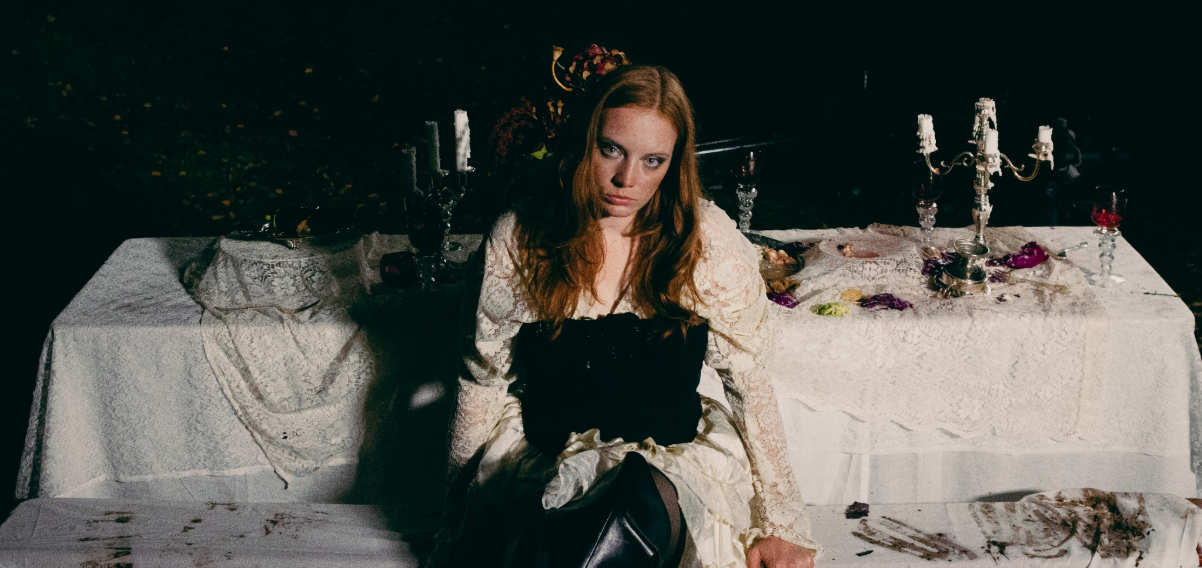
“It was never really a choice,” GERD tells us when asked how she knew she wanted to do music. Returning from a three-year hiatus, the rising Swedish songstress — real name Elin Lundgren — is picking up where she left off. And taking flight.
GERD’s sound feels familiar yet moreishly brand new. The soundtrack to frolicking barefoot in the forest, it carries something instinctive, something that feels like a sense of acceptance for what’s been and a triumphant readiness for what’s to come.
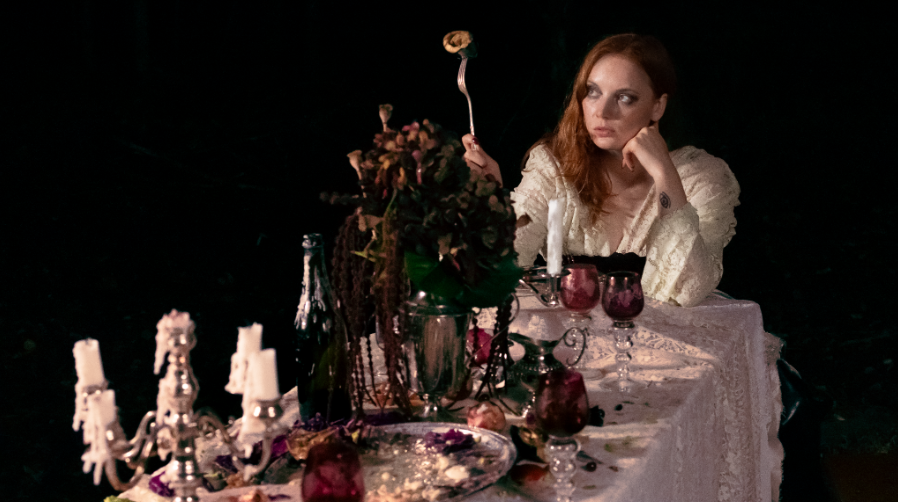
Every one of the award-winning artist’s visuals has been dreamed up by the woman herself. Reminiscent of a Florence Welch/Kate Bush hybrid, the indie-pop prodigy combines folklore, vulnerability, and palpable storytelling to curate an aesthetic that mogs anything 2012 Tumblr had to offer. Drawing inspiration from the rawness of our natural world and the rawest parts of the human experience, GERD creates a realm that feels both innately whole and fantastically wild.
Following her debut single “Lies for a Liar” premiering with Zane Lowe in 2021, and EP “In It to Lose” and debut album “Meet Me in the Blue” in 2024, GERD is back. Her long-awaited sophomore album More Water Than Anything is out now, gifting us a deeply human exploration of loneliness, connection, and intimacy.
She’s made it clear she’s here to stay — and we’re so sat. girlblog! editor Tenai Palomino stepped into GERD’s world to unearth her enchanting sound, how to connect with our deepest selves, and… a swimming moose?
Let’s get into it. What did your early experiences with music look like?
G: I grew up in a very small town and my mother put me in rhythmic class, which was like hitting stuff to rhythms. Just a bunch of kids, like one-year-olds. Then when we were 3 or 4, that group sort of became a musical class, and then at 14/15, it became an opera class. I tried to take piano lessons as a kid, but we had one piano teacher in the city and she could only do once a week, so I ended up in guitar class. There were two guitar teachers, so that was way easier. But I thought it was so boring. I just ended up sticking to opera.
When did you begin exploring genres outside of opera? Was that something you always wanted or did it come later?
G: It just came to the point where opera music wasn’t very cool. That’s why I wanted to play guitar and like, find some boyfriends and go out dating. It wasn’t that cool to be in opera.
You and your boyfriend create all your visuals. Where do you draw your inspiration from? How did you curate your aesthetic?
G: I think when it comes to the full creative process, a bunch of artists are gonna tell you, “I love this other artist.” Of course there are artists I love, but I don’t usually draw inspiration from people or from movies or anything like that. I try to do a bunch of things from ordinary life.
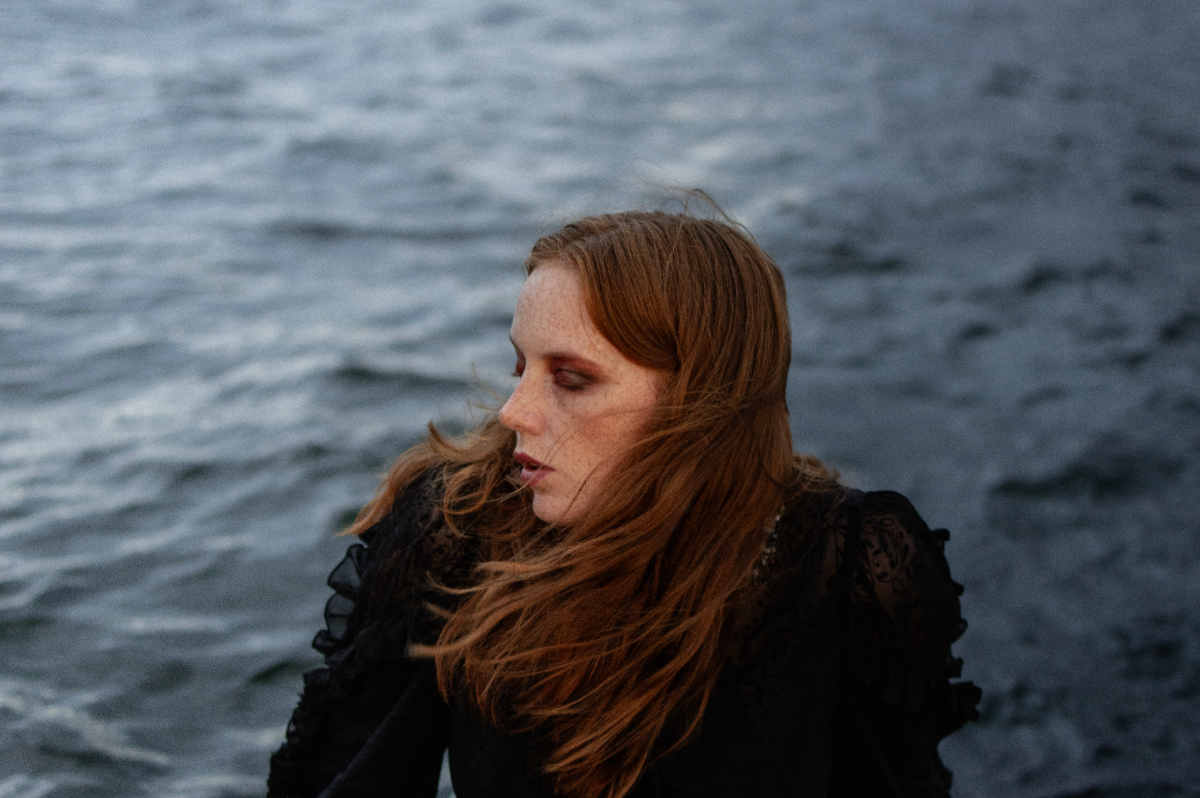
It can be just as easy as looking at the water and being like, “Oh my god, those waves! What if I was on a boat right now?” Then I thought “That’s a really cool video idea.” I found this 60s canoe and I thought, “Would this be dangerous? To be out there?” But I forced my boyfriend to join me as a security guard. He holds the camera, and then I go. So it's a very genuine experience where it sort of just evolves from an idea. And if that doesn’t happen, then I write the music first and think, “Okay, what is this song about?” All of the stories, as soon as they come out of me, I know exactly what the people in my head are already doing.
I’ve read that you have a swimming moose? Is this true? Tell me about her.
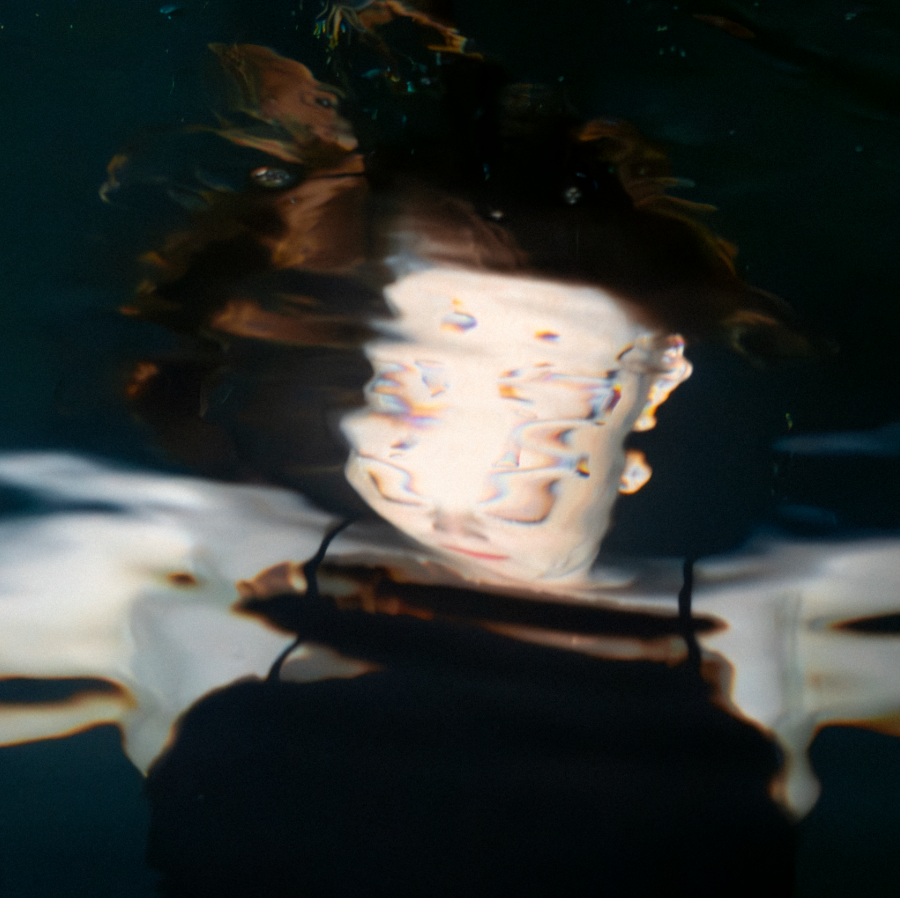
G: So I live on an island and it’s just us. It’s dark and there’s a pier. So you walk down to the end and you go swimming. One evening I was standing there waiting for some friends and I saw this really weird shape in the water. I was like, “What is that?” It was huge. I take my flashlight, and it’s a moose. I didn’t know that moose can swim really far. They can dive up to 12 metres deep to find food. So that became a new fear. That I’m swimming and a moose will just come from underneath. My parents told me it’s super rare to see, they said you may never see it again in your life. I saw it three weeks later!
You’ve previously mentioned how during your hiatus you took time to really connect with yourself. What did that look like? How did you access your deepest thoughts and feelings?
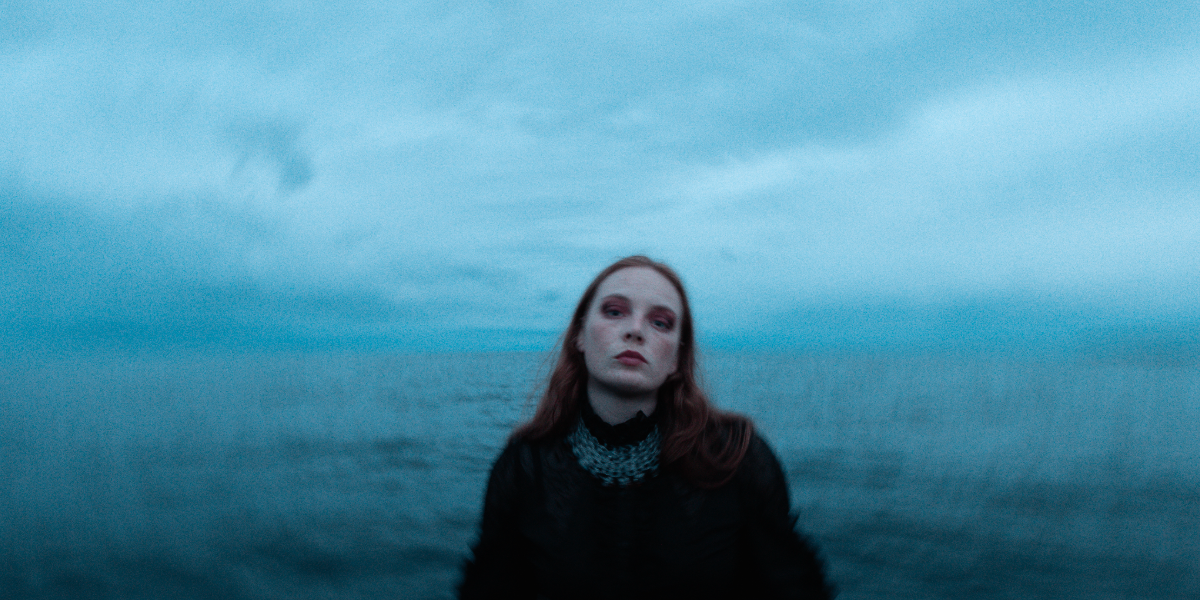
G: During that in-between space, after touring and before starting something new, I felt like the world was pushing so much towards me. And I’m a phone addict, so I was watching other people and being like, “Oh my God, I’m hitting my thirties soon. Am I enough? Am I doing enough? Should we buy a house? Should we get an apartment? Should I renovate?” There were so many things. It was just a total life crisis. And then someone told me to sing something I felt and I was like, “I don’t even know.” So I went to the island and it just got quiet. There’s no cell reception. Everything is quiet and it was so good. And you know, you bring out a bottle of wine, you sit on the pier, you look at the lake. And then stuff starts to happen because you get really bored. And that’s great, you know?
So then I had some friends over and they were there for a few days and we were creating music. We had this competition where we would do different things to make it more of a fun day. One of the guys, they were like, “We’re gonna do a tour of the forest at night.” We were like, “What? No, it’s so scary. And moose!” But we did it and it was so cool. We didn’t go that far, but we had a little lantern and we had wine and we sat on a stone and it just started these things.
Because when you’re looking into a very dark forest and there are the trees and you see the night skies, people start opening up about things. And then you go back and no one asks what we should write about. Everyone just knows. We’re gonna write about that moment, and what that person said and how that feels, because that united us in that moment. And I think it was a very cool place of being very close to your emotions and very close to the music we were writing.
Would you say that’s your process when it comes to songwriting? Quieting the noise and taking time for yourself?
G: Well, maybe from now on. It hasn’t always been like that. But this is a way for me to get centred. And it’s well needed in the world we’re living in. When I started [making music] a few years ago, it was easier to just sit by the piano, and be like “Okay, how am I feeling?” But there is so much going on right now in the world. I need the island.
Your hometown choir feature in your new album. How did it feel to combine the traditional Swedish choir singing you grew up on with the sound you’ve carved for yourself?
G: It feels very empowering. It feels very natural in a way because the island is very close to my hometown. I had the idea quite a long time ago to do something with the choir, but I didn’t know how to use them in a way that would feel like an even split, like they will gain something, I will gain something, we can all walk out even better. But then I had this song and I was like, “Oh my god, we should do a choir! Maybe the choir should be that choir.”
I was spending so much time on the island, and so much time with old folklore, and traditional Swedish history. Because you know, out there you have no electricity, it’s all run by solar power. There’s no water. You start thinking how people lived like this, and [I thought about] my heritage as a Swedish person. I have a lot of farmers in my family, I started to feel very connected to the past. When you understand a bunch of the choir members are as old as your grandparents, and they have a 200-year-old tradition from that place where I am and where I’m writing. It just makes so much sense.
What does life look like for you outside of music?
G: I don’t really do much. I drink wine. I’m out in the forest, obviously. I’m trying to get my flowers to survive, but it’s not going very well. I think I’m one of those people who want another hobby, but I don’t really have one. I’ve picked up several over the years. I think maybe I’m a DIY’er at the moment; I redecorated a whole bedroom. We’re currently making our own stitched stuff.
I hear you love London. As someone who’s recently-ish moved to London, I can really relate to the feeling of limitless possibilities. What do you love most about London and what took the most getting used to after being born and raised in Sweden?
G: I think when you grow up in a very small city, I’d barely call it a city, you look for something very different. London was like the biggest thing I could imagine. So I went there just after school when I turned 18. I lived there for three years and it was some of the best youth years of my life. We did so much fun things.
I think when it comes to my love for London, it’s just so much more cultural than Sweden in so many ways. There are so many different people from different cultures, there is so much arts and crafts. There’s so much stuff going on. I think the Scandinavian people sometimes go wrong in a way. They have to perfectionise everything. The Scandinavian minimalistic design does not always go very well with art. Art is handmade, it has faults. But I felt like London was such a great place to explore that because there were all levels of creators, and it was a very accessible place to enjoy art in your free time. It was a very easy town to have an unplanned live gig for 20 people at a bar, and that would never happen [in Sweden].
Give us a sneak peek: what’s next for GERD? What does the future look like? What can we look forward to?
G: I’m currently working on my tour that I’m going on, which is very exciting. It’s a Swedish tour, but hopefully we’re gonna spill some dates over to the UK. But I have to start with Sweden and see how it goes. But we’re doing that, and we’re writing new music, and yeah.
Touring is a big goal. We’ve started making some songs and I’m like, “Okay, this should be fun. This could be interesting.” I’m working very hard, we’ve made a scent. A GERD scent. We have an art installation. When you walk in, you can see all the costumes, the music videos, all the parts that go into it. I have like 30 different masks that we’re using on stage. I worked together with this class of 17- 18-year-olds that made the monsters inside of them, what they thought of when I told them about the island. So there are a lot of connected arts that I try to bond together with my project. There’s the choir and the girl who made my dress, and so many more. I just wanted to make sure that we all have a moment to show off our arts.
I feel like today, it’s getting more important than ever to not just have an online presence, but to give your listeners something to look forward to and to enjoy. At one of the locations, I’m gonna do an afterparty. So if you buy a ticket to the show, you get to go to ‘GERD with Friends’ in the evening that has cocktails and four live bands that I like that are gonna play with me and on their own as well. So just trying to find something immersive. I want people to say, “I went to GERD, I was there for five hours, I had so much fun!”


Tenai Palomino (she/her) is girlblog!’s Lifestyle Editor. She is a West Midlands-born, London-based writer, editor, and self-proclaimed pop culture fiend.
With international journalism experience and a background in fashion and culture writing, she has written extensively on emerging creatives and ideas that fuel our ever-changing cultural landscape. Having interviewed a wide range of artists, Tenai is drawn to deepening her understanding of the world through the creatives contributing to it. She continues to explore how entertainment and the media influence the way we connect and engage, while balancing her love for the latest horror releases and throwback reality TV.