By Tenai Palomino
Ever felt alien in a conversation about your own reality? Or wondered why you’re struggling to relate to others who experience the exact same thing as you? It’s both something you can’t quite put your finger on and something that stays stuck on you like a second skin.
Black people and women both face unique discrimination, from covert to at point-blank range. But what happens when these identities overlap? Black women exist at the intersection of identities that are deeply intertwined and systematically marginalised. It’s impossible for our experiences to be understood through the lens of race or gender alone.
We are at the mercy of systems of power that shape our experiences in ways that cannot be separated. Despite this, conversations on equality continue to address social identities as separate factors. We as Black women are living proof that this is not the case. And it’s not just us. It’s everyone who carries multiple marginalised identities.
Being represented doesn’t necessarily mean we’re being understood. This is why intersectionality is so key. Let’s unpack what intersectionality is, what it means for our everyday living experiences, and how we can apply it to our lives to better understand ourselves and those around us.
What Actually Is Intersectionality?
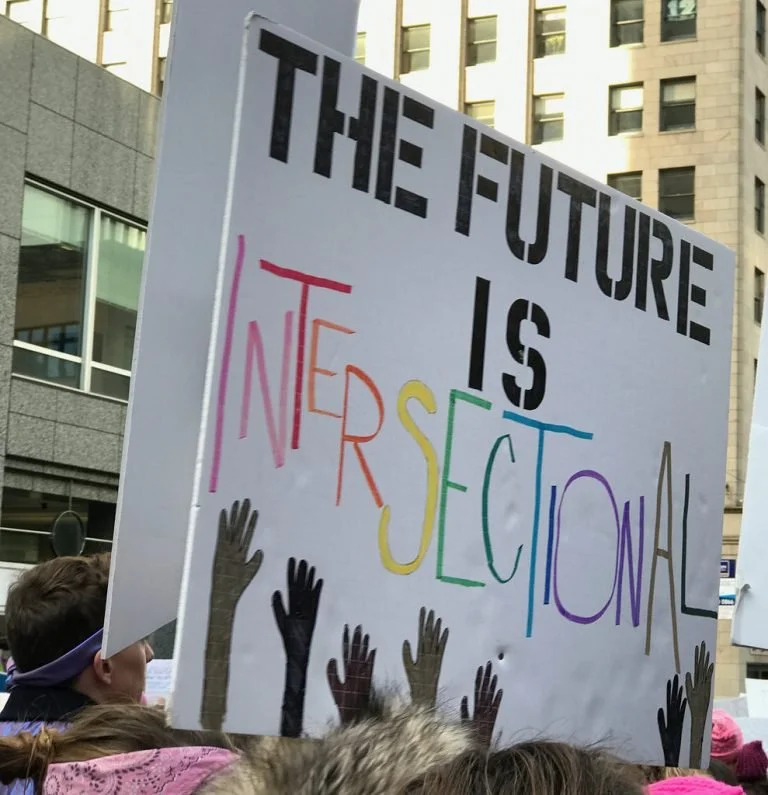
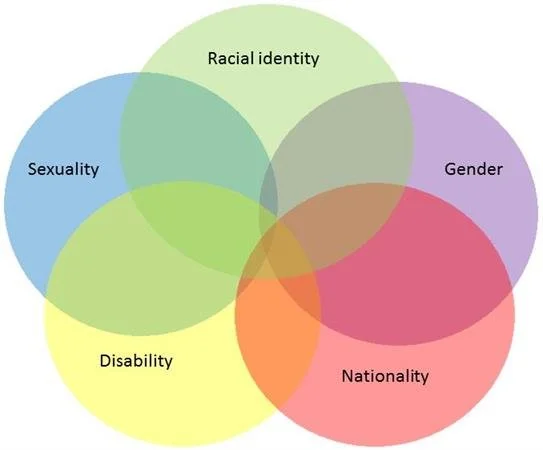
Intersectionality addresses how our social identities — like race, gender, sexuality, ability, class, etc. — interact to shape how we experience the world. It focuses on the unique forms of discrimination (or privilege) we may face as a result of these overlapping identities.
Coined by American lawyer and scholar Kimberlé Crenshaw in 1989, intersectionality was essentially created as a response to systemic failures against Black women. Anti-discrimination laws had been designed to treat forms of discrimination as separate. There was no consideration — or even acknowledgement — of those who may experience two different types of discrimination simultaneously, leaving Black women to fall through the cracks. So much more than a legal issue, this failure to account for overlapping discrimination has a direct effect on how we move through the world.
For example, if you’re a woman, you’re going to experience misogyny in one form or another, like unequal pay, sexual harassment, etc. But if you’re a woman of colour, a woman who is disabled, a working-class woman, or all of the above, you experience an additional layer of discrimination because another part of your social identity is stigmatised. This creates unique strains of prejudice, comprising multiple forms of bias coming from different directions. This makes intersectionality crucial as it acts as a key tool in helping us identify and challenge the unique prejudices marginalised groups face.
How Do Our Identities Intersect as Black Women?
So, how do our identities as Black women intersect to shape our experiences? Being both Black and female creates multi-faceted barriers that permeate every aspect of our personal and professional lives because they directly impact the way we are seen by others. This intersection of misogyny and racism is known as misogynoir.
Misogynoir, a portmanteau of “misogyny” and “noir” (French for Black), is a term coined by Black feminist scholar Moya Bailey to describe the particular form of both racism and sexism experienced by Black women. But it’s not just racism plus sexism. It’s about how the two intersect to create prejudices and stereotypes that are specific to us.
Misogynoir manifests in many different ways. From the “angry Black woman” trope to the dehumanisation of our natural hair to superwoman syndrome and beyond, these experiences demonstrate how racism and sexism intertwine to produce a unique form of discrimination only Black women experience. And that’s just being Black and being female. What about if you’re from a working-class background, if you’re LGBTQIA+, or if you’re disabled? These identities create even further layers of discrimination, creating experiences of oppression that are just as unique as these identities. No two Black women experience the world the same.
The Diversity of Black Womanhood
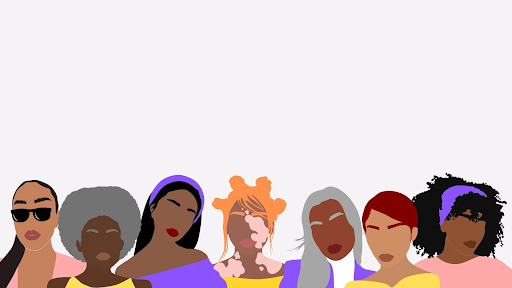
Although we can relate to one another on our shared experiences of misogynoir, we must acknowledge that Black womanhood is not one-size-fits-all. Our experiences of the world are moulded by the other identities we hold, the circumstances we’re born into, and the resources we have access to. It’s important to note that oppression in one area doesn’t rule out privilege in another, and vice versa.
For example, an upper-middle-class Black woman and a working-class Black woman will both experience misogynoir, but their financial circumstances have a significant impact on how they navigate the world. Or rather, what is available to them. The upper middle-class Black woman may have access to private healthcare or a private education, while the limited financial resources of the working-class Black woman mean she faces more barriers. Although their experiences of discrimination may overlap in one area, their access to resources and opportunities is starkly different.
This distinction is key because it shows how we can experience oppression in one area of our lives while benefiting from privilege in another. A Black woman being subject to misogynoir doesn’t mean she may not still benefit from class privilege. A non-binary Black person may face discrimination due to their gender identity, but they may still benefit from being able-bodied. Oppression and privilege are not mutually exclusive, they can exist at the same time.
Black women don’t all face the same barriers, and when this is assumed, it means we pay attention to the experiences of some while neglecting the needs of others. Practising intersectionality means we can acknowledge the differences that shape our lives while also understanding how inequality comes in different forms across the community.
How Do Our Intersecting Identities Affect Our Living Experiences?
Everywhere from the classroom to the workplace, from healthcare to the media, the intersecting identities of Black women impact how we are perceived and treated. At school, we’re hit with adultification bias, meaning we’re seen to be less innocent and older than our white peers. In the office, we can be perceived as intimidating and aggressive, simply for putting across the exact same idea with the exact same gumption as our white colleagues. In healthcare, our pain can often be minimised or completely dismissed, which contributes towards overall poorer health for Black women.
Crenshaw also highlighted how these inequalities can extend to conversations surrounding violence. She noted that in conversations about police brutality, the focus is on Black men, and in conversations about gender-based violence, the focus is often on white women. This is further evidence that when race and gender are treated as separate issues, our experiences as Black women are completely overlooked.
Can you see how this demonstrates that the problem is much larger than individual prejudices? It exists in the very structures and systems of our society, which fail to account for the overlapping forms of discrimination that make up our everyday experience. By addressing forms of discrimination as separate categories, laws, policies, and services fail us. If a workplace has policies to address racism and sexism, but they are addressed only independently, these policies fail to protect Black women because they fail to recognise how racialised gender stereotypes uniquely affect us.
This echoes the work of Black feminist scholar bell hooks, who maintained the importance of understanding how race, gender, and class interact. When we recognise these interconnected systems of oppression, we can not only improve our understanding of ourselves and others, but create space for the conversations that intersectionality calls for.
How Can We Put Intersectionality into Practice?
Practising intersectionality in our everyday lives doesn’t have to be complicated. We can start with small steps to shift how we see ourselves, how we see one another and how we respond to experiences that differ from ours.
Stop Comparing
Don’t compare your struggle to someone else’s. This is not the oppression Olympics. There is no winner. We can recognise the discrimination we face without dismissing the discrimination others face. We can also acknowledge our privileges without pretending our disadvantages don’t exist.
Start Listening
Listen to those who look like us, and listen to those who don’t. Listen without immediately comparing or reacting. You can still recognise something as real without having experienced it yourself. Question whose perspective is being centred, challenge stereotypes, and learn from others who live different realities.
Don’t Box Yourself In
Black womanhood is not monolithic. We are multi-faceted individuals and we don’t have to fit anyone’s idea of what a Black woman should be. Our experiences are varied, and we are allowed to take up space however which way we see fit. We’re allowed to challenge the way others see us, we’re allowed to change our minds, and we’re allowed to exercise liberty on our own terms.
Ultimately, intersectionality asks us to challenge what we think we know about ourselves and others to make space for deeper understanding, empathy, and solidarity. In doing so, we can create a world that sees Black women - and other marginalised groups — in our entirety instead of through a single, rigid lens. People love to say “Not everything is about race.” What a privilege to feel that way. Because for us, actually, it is.

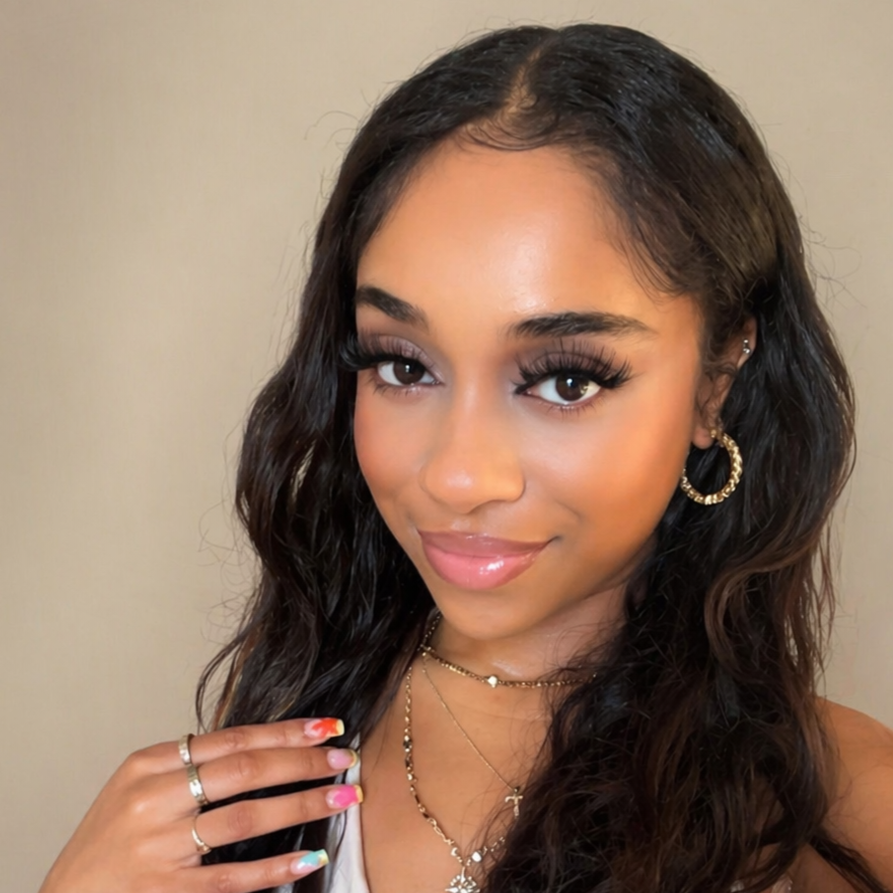
Tenai Palomino (she/her) is girlblog!’s Lifestyle Editor. She is a West Midlands-born, London-based writer, editor, and self-proclaimed pop culture fiend.
With international journalism experience and a background in fashion and culture writing, she has written extensively on emerging creatives and ideas that fuel our ever-changing cultural landscape. Having interviewed a wide range of artists, Tenai is drawn to deepening her understanding of the world through the creatives contributing to it. She continues to explore how entertainment and the media influence the way we connect and engage, while balancing her love for the latest horror releases and throwback reality TV.