
The Black Girl’s Guide to Class Consciousness
By Tenai Palomino
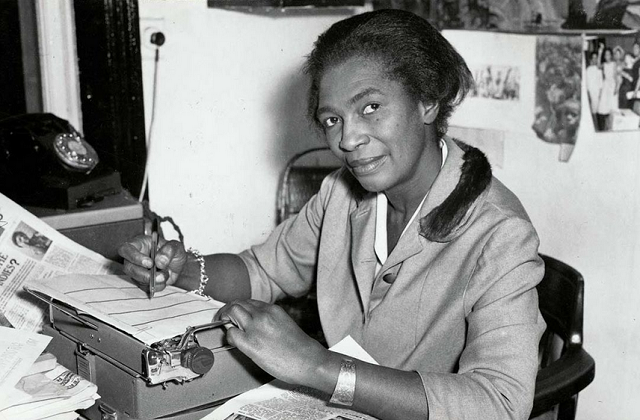
Trinidad-born journalist, feminist, and Communist Claudia Jones
Your career, your bank account, your decision to read this article; how much of your life is really the result of your own choices? Individual choices matter, but they’re made within a larger social, economic, and political landscape. A landscape that, for Black women, is complex and deeply rooted in historical plight. How can we start to unpack the forces shaping our lives? How can we better understand the opportunities we have or haven’t been given? And how do we make sense of our societal positions as a marginalised group?
Class consciousness is a term coined by the “father of communism”, Karl Marx. Essentially, it means identifying your place within the class structure to then advocate for and contribute towards greater class equality. A more equal class structure would mean fairer distribution of wealth and resources, effectively shifting the status quo and creating a more beneficial society for all.
It’s vital to understand that class is defined by more than economic capital; it’s also influenced by social and cultural capital. Social capital looks like the people you know and the in’s you have, and cultural capital looks like what you know and how you move in different environments.
When we understand this, we not only understand more of ourselves, but of others, too. Our friends, colleagues, total strangers. By achieving class consciousness, we as Black women can begin to unpack the dynamics at play in our lives and the lives of those around us, enhancing our collective awareness in the fight for social justice. It’s a win-win for everyone. And in this piece, I’ll show you how you can start to get there.
Step One: Identify Where You Sit
The first step to achieving class consciousness is to identify your position within the class structure. Although there is no single universal class breakdown, the most recognisable breakdown is:
The Upper/Ruling Class:
Aristocratic families and those with significant ownership of wealth and social and cultural capital. Those whose main income comes from assets or inherited wealth rather than their own labour. In Marxist terms, those who own significant capital are part of the bourgeoisie.
The Upper-Middle Class:
Highly educated professionals (doctors, lawyers, academics, etc.), usually with substantial wealth and social and cultural capital. Marx described this group as the petit-bourgeoisie, those who own capital while also working.
Middle Class:
Often university-educated in white-collar occupations (roles that require analytical skills instead of physical labour), with substantial financial security. Although Marx didn’t define a middle class in the way we understand it today, it is essentially those who fall between the bourgeoisie and the proletariat.
Working Class:
Those whose income comes from selling their labour, with relatively limited economic security, asset ownership, and access to social and cultural capital. Within Marxist theory, this group is known as the proletariat.
To understand where you sit within this structure, there are a few key questions to ask yourself:
What do I earn?
What do I own?
What do my family own?
Who do I know?
What opportunities have I had access to?
By answering these questions, you can start to see how factors besides your income influence your class standing. Two people both earning 60k a year can be in entirely different social classes. One person may come from a wealthy family that owns multiple assets and has a very powerful network, while the other may be the first in their family to earn such a salary but have no savings, assets, or access to elite social spaces.
Understanding our position as Black women is vital to achieving class consciousness. This is because, for us, our class positions speak to much more about the resources, security, and power we have access to. When we educate ourselves on where we sit, we not only begin to recognise what we have, but how our position compares to others and what it does or doesn’t allow us to do, have, and influence.
Step Two: Understand How You Got Here
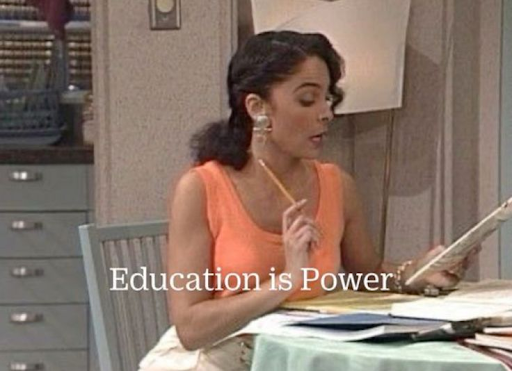
Once you’ve identified your place in the class structure, it’s time to understand how you got here. The answers to those questions you just asked yourself aren’t necessarily just the result of individual choices, they speak to the conditions surrounding those choices. This is a crucial distinction.
For example, if you went to university, consider what made it an option in the first place. It’s not just because you worked hard and have dreams. That choice is shaped by the wider socioeconomic landscape we live in. Did your parents go to uni? Did they encourage you to apply? Could they support you financially? Could you afford to move away? These are the kinds of questions we must ask ourselves to understand how we got where we are. These questions don’t negate your individual achievements, but encourage us to consider what made these achievements possible.
As Black women, we undoubtedly have another layer shaping our experiences. We cannot begin to achieve class consciousness without understanding the inherent link between race and class. Historically, we have had limited access to wealth because we were the commodities. And that history didn’t disappear when slavery ended. The ability to pass down wealth was directly shaped by those who had access to property, education, well-paid work, and capital. This separation of Blackness and wealth permeated generations, and still does. This doesn’t mean that there aren’t Black aristocrats, Black homeowners, Black professionals. But to properly understand our class standing, we must look at our families’ history against the backdrop of the social conditions that shaped the opportunities available to them. The system was not set up in our favour. It was intentionally created to put us at a disadvantage.
This is why hustle/girlbloss culture can be particularly harmful to Black women. There’s nothing wrong with working hard, staying consistent, and having a strong drive to be successful. But we can’t ignore the historical implications of Black women’s pursuit of capital.
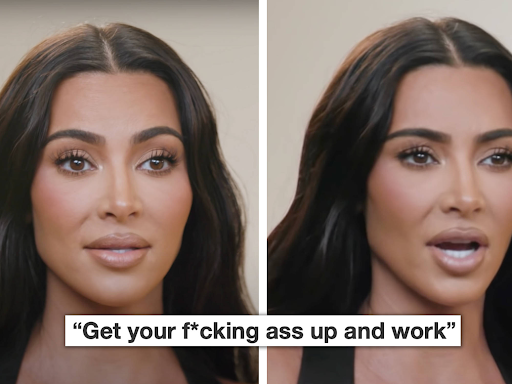
From Molly Mae’s “we all have the same 24 hours” to Kim K’s “get your fucking ass up and work,” we’re continuously told (by millionaires, mind you) to simply work harder. But working at the same rate as non-Black women doesn’t automatically mean we’ll achieve the same things. It’s not the same for us. We’re taught we have to work twice as hard to even enter the same room as others, let alone sit at the same table.
Step Three: Question Your Inner Monologue
Our inner monologues represent our most honest, unfiltered thoughts. And given the amount of messaging we absorb on a daily basis, both subliminal and direct, it’s vital to make a habit out of questioning this inner monologue.
If you feel like you need to work harder, work a different job, or work a second job, ask yourself why. Don’t question yourself and the choices you’ve made, question the system and what is and isn’t available to you. This isn’t a way to shift personal accountability, it’s a way to analyse our social, economic, and political landscape and our footing in it. We’re not failing ourselves, the system is failing us and making us think it’s a personal problem.
When we don’t question our positions, we risk falling victim to false consciousness. This is another Marxist term that describes how disadvantaged groups of society absorb beliefs that make them accept and defend systems that act against them. This can be as simple as believing that our financial struggles are entirely our own fault and that the only way to improve is to work 10x harder than our neighbours.
The ruling class love this for us, because it keeps us from uniting to demand fairer distribution. It means they can keep hoarding capital and resources, oblivious to the fact that fairer distribution creates a more stable society for them to conduct business in. Without class consciousness, we’re solely focused on individual success, which only reinforces the belief we must simply work harder to get ahead. Again, for Black women, this is especially complicated because the formula is intrinsically flawed.
Question everything, especially who benefits. Who benefits from Black women seeing structural failures as personal problems? Who benefits from us believing our success is entirely down to us? Who benefits from us seeing other Black women as competition instead of allies? Class consciousness begins when we stop accepting things for what they are and start asking why it’s like this in the first place.

Step Four: Examine Your Relationship with Other Classes
As we’ve established, self-awareness is key to achieving real class consciousness. This extends to asking ourselves questions about how we see other people. If you’ve ever had thoughts like They’re choosing to live like that or I’m glad I’m not like them, these thoughts deserve attention. We cannot truly achieve class consciousness by only understanding our own place within the class structure. We must also understand how our class positions influence the way we view those above and below us.
Exploring how we feel about other classes can be uncomfortable because it forces us to acknowledge the class stigmas we’ve subconsciously adopted. It’s not a morality competition, and it doesn’t mean we’re inherently unjust, but it does mean we’ve picked up some damaging thoughts within a system that is intentionally constructed to divide us. We’ve all been exposed to these ideas, but the point is to recognise them, question them, and understand how they influence the way we move through the world.
Black women occupy every level of the class structure, which means our experiences of wealth and economic security can look very different. Ask yourself what assumptions you’re making about other people, if you associate wealth with worth, and if you’re embarrassed or flattered by aspects of your own class background. Do we judge a woman for the way she speaks, what she wears, or the job she has? Do we see the working class as something to escape and the middle and upper classes as something to aspire to? These assumptions are all forms of class stigma, and recognising them is key to becoming class conscious.
The main goal is for us to solidarize and improve the quality of life for all across the class structure. We can’t do that when we’re so focused on ourselves. We must consider how we can promote both fairer opportunities and resource distribution, and how we can challenge the systems that make some of us wealthy at the expense of others.
So, What Now?
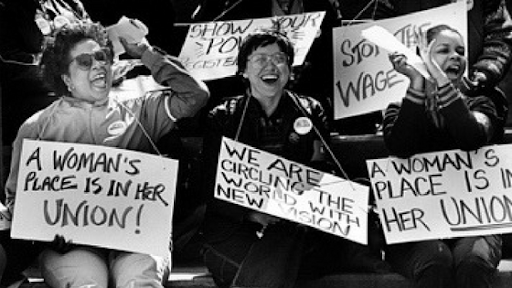
Achieving class consciousness for Black women is a process. It can take years, a lifetime even, because it forces us to unlearn messaging we’ve been told our entire lives, to literally rewire our brains. So don’t feel like you’re failing if you catch a classist thought cross your mind. The only way you can fail is if you don’t acknowledge or challenge it. Again, question everything. Then question it some more.
Instead of thinking about how you can only improve your individual circumstances, consider what needs to happen for Black women to have better circumstances collectively. And as your circumstances change, continue to ask yourself why and how this change has happened. It’s counterproductive to feel guilty over the privilege you have, however that privilege looks in your life. But by understanding what we have access to, we can start to think about how we can use our resources beyond ourselves to benefit all.
Challenge the idea that individual success is the solution, especially for us and other disadvantaged groups. Focusing on how prosperity can become a collective reality instead of an individual privilege is the most powerful thing we can do.


Tenai Palomino (she/her) is girlblog!’s Lifestyle Editor. She is a West Midlands-born, London-based writer, editor, and self-proclaimed pop culture fiend.
With international journalism experience and a background in fashion and culture writing, she has written extensively on emerging creatives and ideas that fuel our ever-changing cultural landscape. Having interviewed a wide range of artists, Tenai is drawn to deepening her understanding of the world through the creatives contributing to it. She continues to explore how entertainment and the media influence the way we connect and engage, while balancing her love for the latest horror releases and throwback reality TV.