
Halloween 3: A Consumerist Critique that Became the Franchise’s Future
By Avery Jay
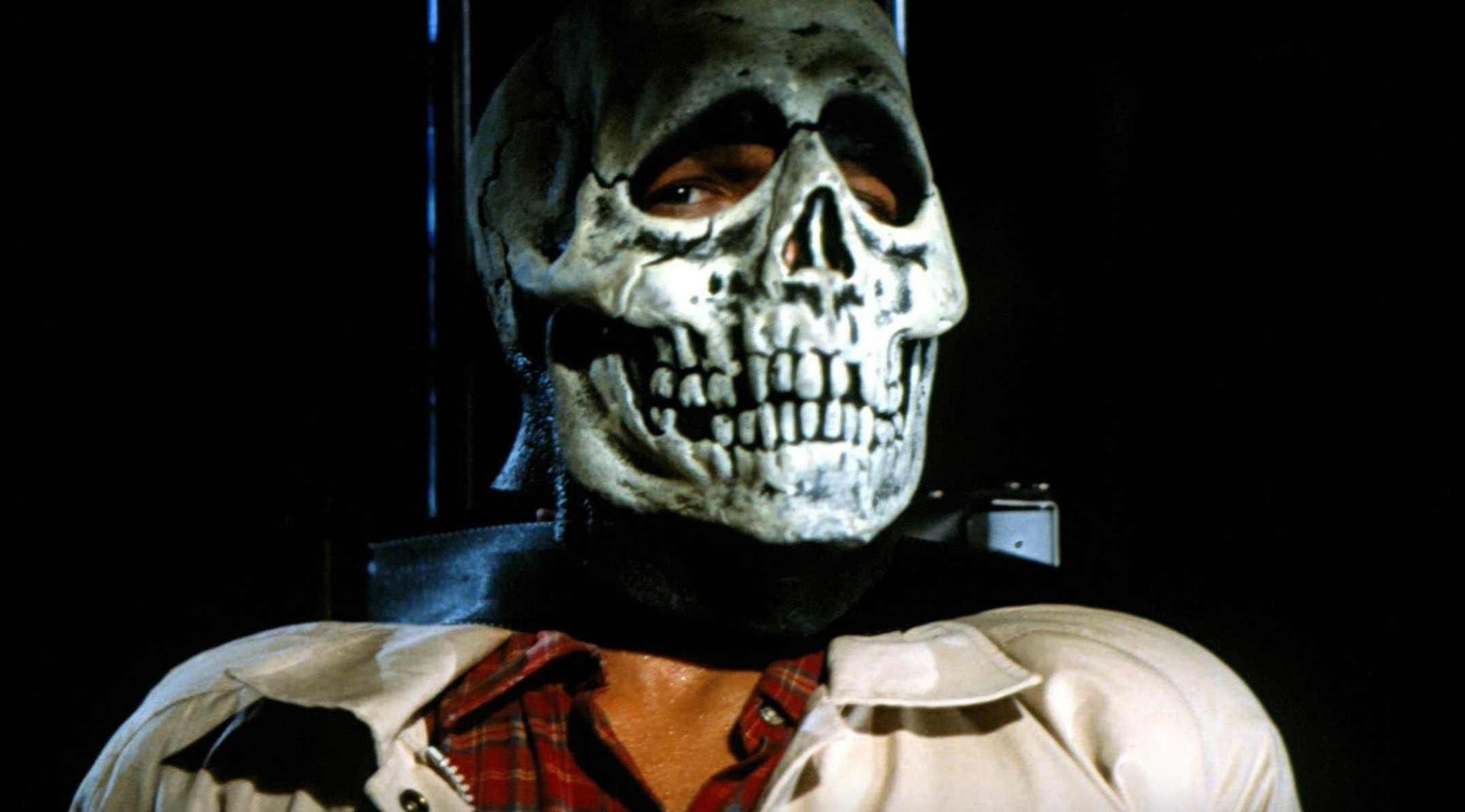
Tom Atkins in Halloween III: Season of the Witch (1982)
This article contains spoilers for Halloween III: Season of the Witch.
The Halloween franchise has never really been a cohesive series within horror. After the last two installments from David Gordon Green, even longtime fans have lost faith in the franchises’ direction. I blame capitalism. John Carpenter’s Halloween was never supposed to have a sequel– let alone a whole franchise. But the studio saw how audiences reacted to the first: particularly to Michael Myers. At the dawn of the slasher boom, Halloween’s lasting impression was far removed from the slain babysitters.
How Halloween 3 Came to Be
Carpenter and his collaborator Debra Hill didn’t have a vision for a sequel. To them, the story of Michael Myers started and ended with Halloween (1978). Universal eventually came to them with more money asking for a second film after the success of the first. It was the Obsession of its time as an independent movie seeing more money in the box office than what it had been made for. John Carpenter would probably admit that he sold out by signing on for Halloween II. It’s definitely not a film he’s proud of, describing it as “an abomination” and a “horrible movie” in an interview from 1984.
Halloween 3 was their attempt at course correcting. Hill and Carpenter moved away from the Michael Myers mythology. They were excited by the future that the franchise could have by anthologizing it instead. But their own creative passion was rendered by public disappointment. When the third installment was released, the elusive trailer led fans to believe that Myers was making his return. What they ended up watching was a science fiction epic with witchcraft and a conspiracy unfolding during Halloween. It bombed. Carpenter wished it hadn't, though. Talking to Vulture, he explained, “I wish it had [succeeded] because we could start telling other stories.”.
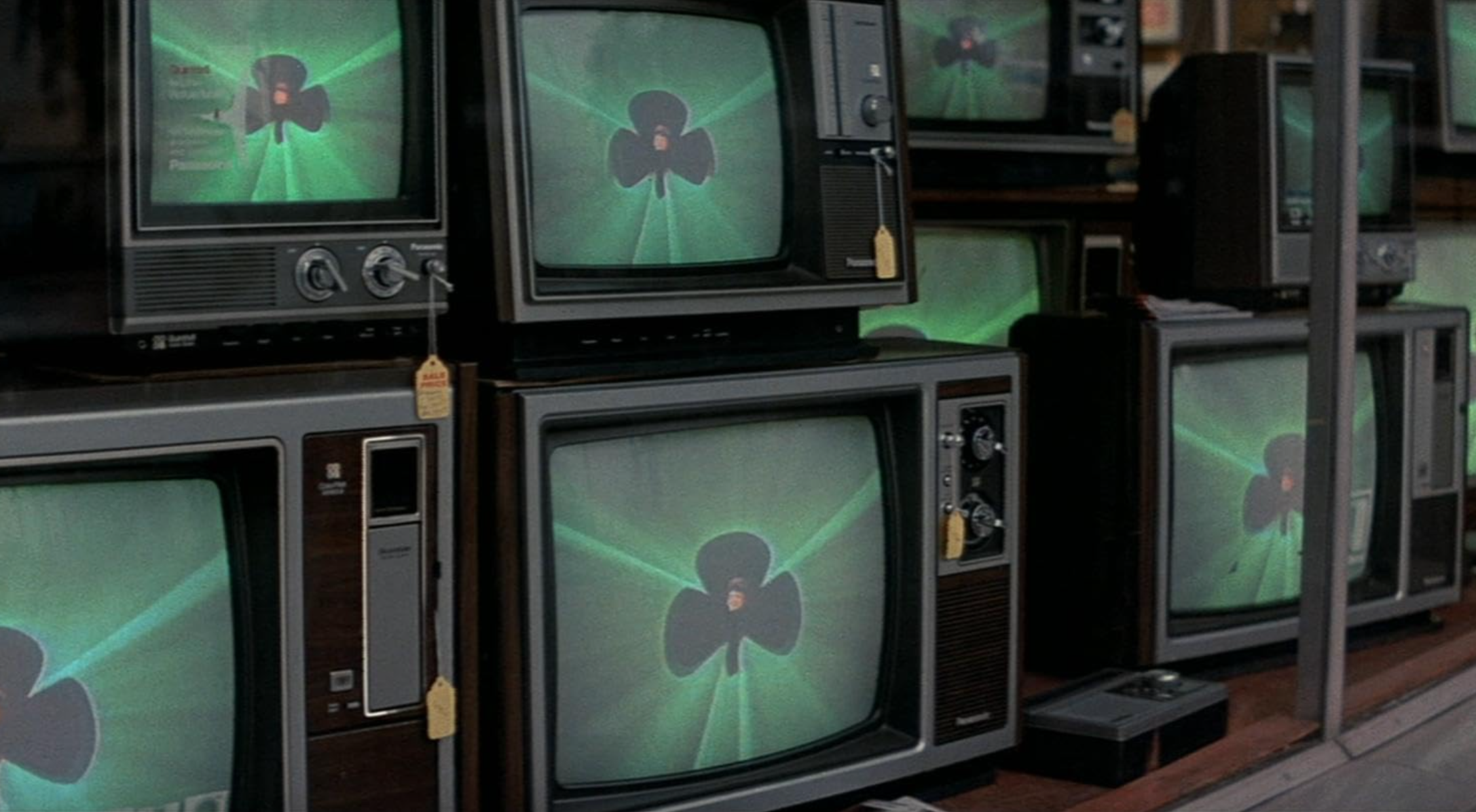
Halloween Without Michael Myers
I've loved this movie since catching it on AMC FearFest enough times. After seeing it in chunks here and there, I eventually watched it from start to finish. It's steeped in the holiday's essence which is what initially drew me in. I didn't know it was a Halloween movie, but imagine my surprise when I did find out. I grew up loving Michael Myers as a horror figure. His absence from this particular movie even enticed me, however. I didn't need a slasher movie when what I was in search of was a movie of the season.
Directed by Tommy Lee Wallace, Halloween 3: Season of the Witch follows a new character in California rather than Illinois. Daniel Challis (played by Tom Atkins) is a physician by trade and a neglectful family man on the side. On a night in October, one of his hospital patients dies at the hands of an ambiguous assailant who immolates himself immediately after. When the patient's daughter and Challis embark on a journey for answers, they find more than they bargain for. The company behind the newly trending Halloween masks are up to something and killing anyone who threatens to spoil it.
Capitalism: the perfect scapegoat for sacrifices
The Halloween vibes kept me coming back to this movie over the years. The underlying themes of consumerism and capitalism became more apparent over time, though. With a catchy jingle and secured TV spot, there’s not a kid who doesn’t know about the Silver Shamrock masks. They all want one. Even Challis’ kids voice their disappointment when he brings costumes that are different from the ones on TV. But the masks lack diversity in their design, much like the surveilled company town of Santa Mira. Conal Cochran makes sure that the truth about the humanoids, disappearances, and national sacrifice are kept under lock and key.
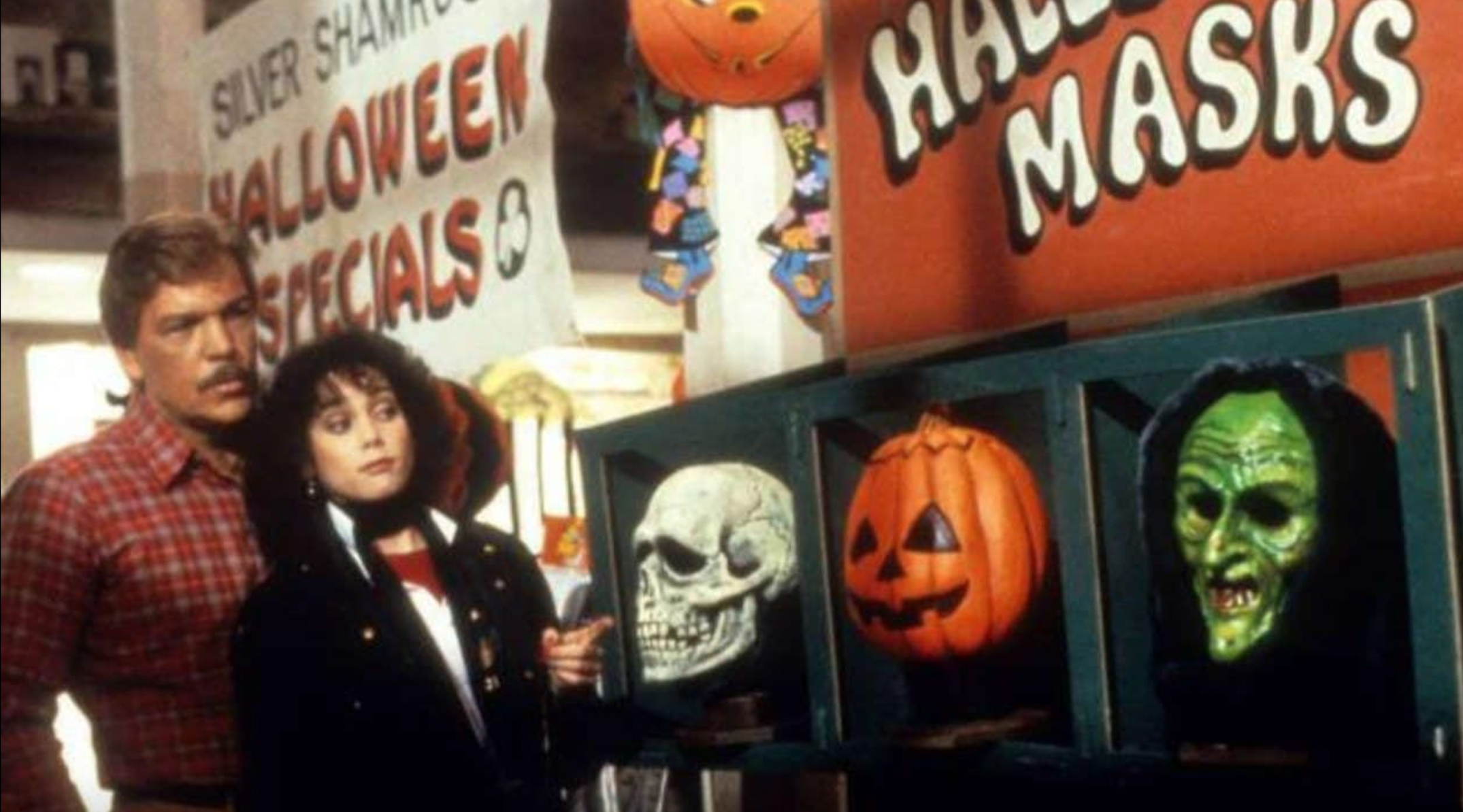
Tom Atkins and Stacey Nelkin in Halloween III
Selling to impressionable young minds was all the rage in the 80s. Consumerism ran amok during this time when shopping mall culture was at its height, and society became increasingly materialistic. It was Reagan’s World and children’s entertainment became a playground for toy advertisements. Cochran has been capitalizing on consumerism for a while selling practical gag toys. But capitalizing on Halloween was the perfect vehicle for a successful sacrifice. He doesn’t believe in the American celebration of Halloween but rather the Celtic observance of “Samhain”.
In the second Halloween, Dr. Loomis, by way of Myers, introduces this word into the canon. He explains the origins of Halloween as a day when the veil to the “Otherworld” was weakened. Cochran, in Season of the Witch, provides further context about Celtic folklore and sacrifices during the ancient festivals. He explains that it has been 3,000 years since the planets last aligned for a great sacrifice. The mass production and distribution of American products ensured that every kid in America would have a Silver Shamrock mask in time for Halloween. Each mask comes with its very own microchip soon to be activated by Cochran’s live television event.
The film’s ending is surprisingly bleak and devastating: two feelings that we’re all familiar with amidst late-stage capitalism. But it speaks to the future of the Halloween franchise. Carpenter gave up control with what was originally his shared project with Debra Hill. He faced a writer’s block that could only be cured with alcohol while writing Halloween 2. And in the aftermath of Season of the Witch’s poor ratings, he left the film behind for other producers to take the wheel. He’s admitted to not having seen many of the sequels. One of them even made him cringe. So as Challis screams, “Turn it off, stop it” at the broadcaster over the phone, my mind drifts to John Carpenter’s loss of creative control.
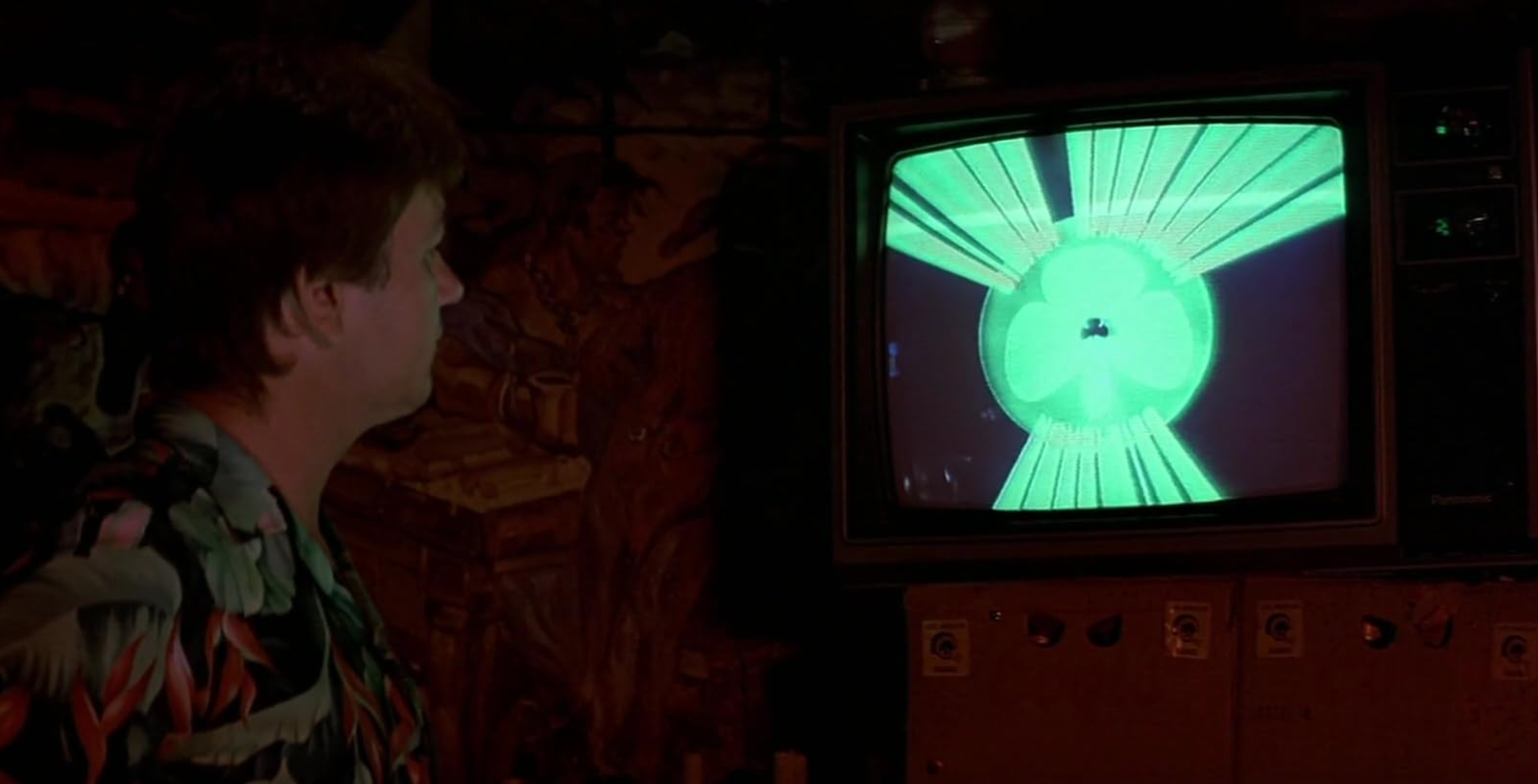
Loyd Catlett in Halloween III
There is a right way and a wrong way to watch the Halloween franchise. The wrong way is leaving Halloween 3: Season of the Witch out of the rotation. Despite Michael and Laurie’s absence, and the change of setting, it can still inform the rest of the franchise. Occult practices and conspiracies anchored Michael Myer’s motives for his killing sprees after the third film. The writing is choppy amongst the ‘Thorn Trilogy’. I won’t deny that. And most people hated that Michael was given some sort of purpose to kill rather than a desultory killing machine. Halloween 3, though, plants the roots for the trilogy by digging into a seasonal tradition that’s absent of Western influences. It was never really about Michael. It’s about October 31st as a day for the living and the dead. That’s why this movie is the best one of the franchise to watch this season!
Avery Jay (she/they) is girlblog’s Film & TV Editor. She copes with the horrors of the world through her love for horror in the media.
They're a journalist hunting down the best queer horror, a scholar tracking the history of Black horror, and a community organizer bringing diverse genre fans together in NYC and beyond. There's no such thing as a "bad movie" where Avery's concerned.
Her work has been published across entertainment publications: in print and online. They're the Horror Oracle: divining horror's mystique.