
By Tenai Palomino
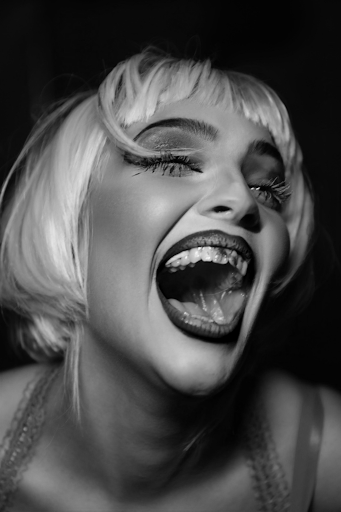
Infusing alternative pop with haunting melodies and hypnotic lyricism, RIVER is creating her very own sonic universe. Born and raised in Gothenburg, Sweden, RIVER has an enthralling history of looking within herself to create art that is truly timeless.
Real name Elsa Sommarström (RIVER is a play on her surname, which means summer stream in Swedish), the singer-songwriter-director is building a deliciously cinematic world. Citing inspirations including Mazzy Star, Nina Simone, and Elvis Presley, Elsa’s artistry transports listeners to a surreal and dream-like dimension, delivering one of alt-pop’s most compelling new voices.
Her latest single Paradise, from upcoming debut album A dying source, is the final piece of a carefully curated video trilogy, following singles City of Thirst and Change. Inviting us into a world of polished chaos and confetti-covered carnage, the video trilogy introduces us to a persona that resembles a haunted Sabrina Carpenter in the best possible way, and a storyline that burrows within our minds. A powerful preface to A dying source, the video trilogy cements RIVER as a rising visionary who’s undeniably in a league of her own.
Originally shying away from the spotlight, Elsa is now embracing her purpose, using RIVER as a vessel to bring her deepest desires to the forefront and take us on an awe-inspiring journey through an intoxicating soundscape.
girlblog! Editor Tenai Palomino sat down with Elsa to explore her artistic identity, visual influences, upcoming debut album A dying source, and so much more. RIVER is one to watch. You heard it here first.
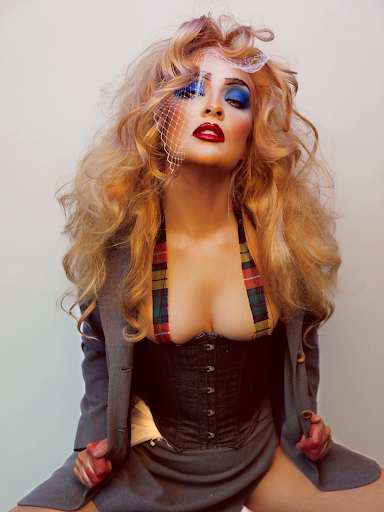
I’ve read that your musicality started in secret. Why was that?
R: It was because I felt like I naturally got into a position where I was the middle child and I was like, in between. I wasn’t in a space where I felt that devoting myself to music was something I should do, and it’s not like anyone told me, “No you should not do that,” because I didn’t even feel like that was something I would like to do. I was so horrified of stage fright and so, yeah. It took me a while before I realised it was something that I would definitely surround my whole life.
How do you feel now that you made that choice?
R: It feels great. I almost forget sometimes how I was back then. And now it feels like a given; that this is what I’m supposed to do.
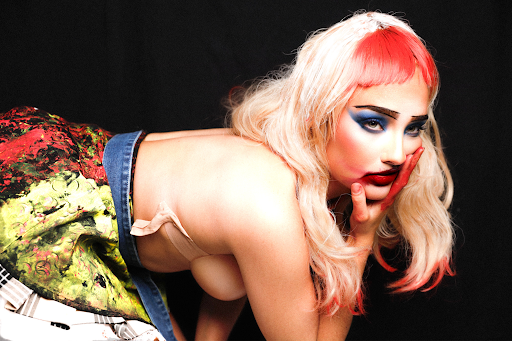
RIVER and Elsa started out as two separate entities. How do you think this impacted your artistry? Are RIVER and Elsa now one?
R: To create RIVER made me more fearless to lean into what I wanted to do and to explore and just be playful with what I wanted to express. I had a lot of stage fright and I also felt to devote myself to be an artist was not expected of me and I had codependent relationships back then. I felt weird, almost, being whatever I wanted to be as an artist. So I decided to create a persona where I could be whoever I wanted, and then I created RIVER. And that helped me to just start from scratch. That’s why it’s a new persona, because I really went all in when it came to the music and what I posted and what I created.
I went far beyond what Elsa would have done before, and I also feel like in the beginning, I was getting a little bit lost in playing a persona. Like, if we would have done an interview today, I would not have been myself, and that didn't suit me either. But I think it was necessary for me to become whatever RIVER was back then, 100%. Naturally. Like, this happened naturally, and I think through this album I found myself in a safe space and in a space where it was just... I don't know how to explain it, but you have to be true to what you want to express at the time.
So back then, that was what I was supposed to do, and that got me here, and now I'm expressing what feels true to me. And this is maybe a little bit closer to Elsa, but it doesn't mean that back then it wasn't true. It had something for me, of course.
What do you love about 1994 cult classic Natural Born Killers and what makes you draw inspiration from it for your visuals?
R: I love the abstract way they communicate what happens. I feel like that movie has such a… It's not like, okay, now this is happening, blah blah blah. It's not like an ordinary drama. It has a very artsy way and a very personal way of building a movie and a story. So, I definitely think what makes me love it so much is the visuals. I also love the characters and I think it's quite controversial as well. It was quite controversial at the time. So, that's something I appreciate as well.
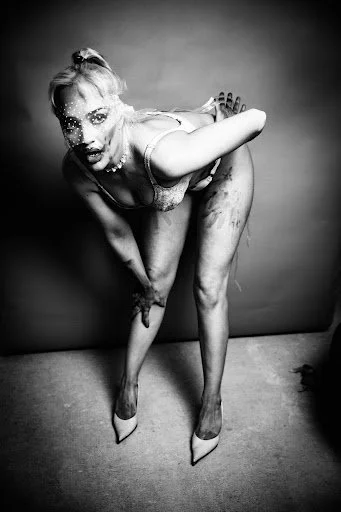
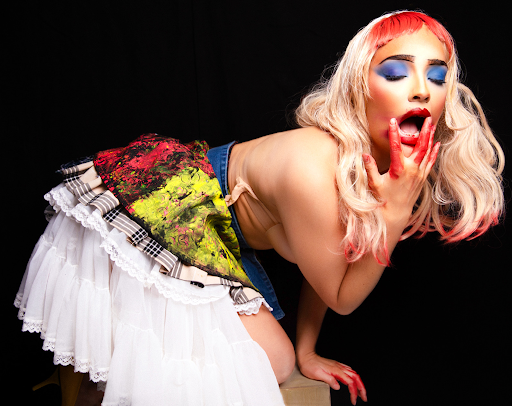
Your kitsch-inspired aesthetic is so fun, playful and even a little bit surreal. I especially love your make-up looks. What appeals to you about kitsch?
R: Well, it's hard to say really, because I just know what I like. I know what looks appealing to me and it's not usually... or at least what I think, how I do my makeup and all, I don't think it's drawn to [the] mainstream. It's a little bit unique. I just think it’s fun like, it’s so liberating playing with my looks and visuals. It makes me feel free and feminine, and have fun with my femininity and sexuality, or just my inner power as well.
Were you always so expressive with your looks?
R: I started quite early. I love Elvis Presley, I was such a fan of his since I was young and I love the Priscilla Presley look. His wife had this huge hair. So I started doing that back in school. Very 50s-60s. So, I always liked that, and I always liked dressing up. I loved almost like role-playing, I think that sits in me. And I think it goes in hand with my desire to get into theatre before I started with music, and like, to just play and express myself through my looks.
How I dress up, it's almost like a joke, you know, because everything we do is a joke. No, but you know what I mean? It's like I'm making fun almost, when I do it. It’s quite like I’m overdoing it. Almost like a drag queen, you know? It's a role play, almost. And I love to see it that way.
I read that you lived in Mexico for a while, singing at bars and festivals, and also working as an actress. What was your time in Mexico like and did it have an impact on your art?
R: Yeah, definitely. When I went there, I went there to work at a theater, backstage. But I wanted to be on the stage, and I eventually started doing some musicals and short plays. And it all led to me doing more music because I feel like that's where I also got [the] most response. Like, when I did musicals, I realised, “Okay, that works!” And I also realised acting doesn't come as naturally to me, and I had started writing my own songs and… yeah. So in Mexico, I felt like I could just start from scratch, building something.
I grew up with soul and blues and jazz. So when I was there, I was just like introducing myself as a jazz singer, but I mean, I'm not schooled. I wasn't a jazz singer. But I said that and just like, "Yeah, I need a band. Would you like to play with me? I'm a jazz singer," blah blah blah. And then yeah, I got together a band and we started playing. It helped me a lot with the stage fright as well and finding my place like, on stage. And also to be there on my own and just being with myself definitely had an impact on me in many ways.
You’ve mentioned that you can only write when you’re experiencing some kind of pain. Why do you think some of the best art comes from suffering?
R: I would say because it's the hardest thing to express, and that is something we usually shy from showing and sharing with other people. Because we are ashamed of the feelings that we are feeling and we want things to look good on the outside. And then in music, it gets very powerful if you hold all of those things in. And it's- yeah, it has to be that. It definitely feels more powerful than making a happy song or a text in any way.
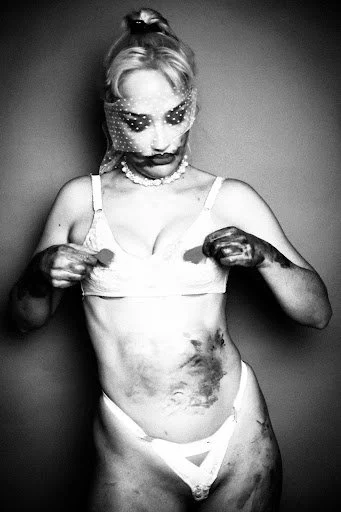
Your new song Paradise was recently released with a really compelling kitsch-inspired visual. I didn’t want to look away. What’s the story behind this song?
R: This is the third part of a trilogy that started with City of Thirst. The same guy in the Paradise video was in the City of Thirst video. [Paradise] was inspired by Natural Born Killers. I wanted to show that the couple were, like, twisted. Like maybe psychopaths or something, like something was off with them. But then I thought it would be fun to do like a series where I don't show everything in the first video, and then you can see more in the second video, and then in the third video you get more.
So from Change, the second single, you could assume that I might have killed him or something. But it's very like, subtle. ‘Cause you can see that he's in there, in the TV, and has like, a knife to his face, and bleeding, and so. If you see all three [videos], you can assume that she did attempt a murder, but he survived, and she is definitely a wacko.
But then I was like, “How am I going to show that? Will it make sense or is she just going to be a mean person who's feeding him cat food?” But then the day before the recording, I was like, “Now I know what I'm going to do. We're going to do it like this.” You know the last scene where I'm like turning around and it's like, I'm on a stage, and then it gets more obvious that she's really insane, like she thinks that she lives in a different reality.
When she turns around, and she's got the sash on, and there's the confetti.
R: Exactly. And the flowers show up, and yeah.
What do you do when you’re not making music? How do you like to spend your downtime?
R: I'm very much a loner, I would say. I definitely like to spend time with myself. It could be watching movies, be with friends, but just like very… I'm very boring, I think, in other people's eyes. But honestly, I'm very bad at living a life outside music ‘cause I'm like, very surrounded. If I'm not writing, I’m making music videos that I'm directing and producing and like, making the visual art. It's my hobby, and I love it. It's like 98% what I do, but I think I should learn to get some input as well because that's very necessary if you're going to create. I have those times as well, but I'm very much like… I have a hard time letting go of things and the projects that I'm starting.
If you could pick up the phone and call your younger self, what would you want to tell her?
R: You’re gonna be fine. It's a boring answer, and I think I would have to say it to my yesterday self as well… because that's a problem. Problems are showing up all the time, and then it's so easy to be like, “Oh my God, this is happening!” and “No, I haven't paid this bill again,” you know? Or like “No, this didn't go as I thought.” But then it's fine. Like, most of the things that we are feeling aren’t really a big deal, and sometimes they are. But they are also very important, like the worst parts of our lives are many times our biggest blessings, so it would be like, terrible if nothing ever happened to us. So yeah, I would say try to treasure the obstacles and the rough times.
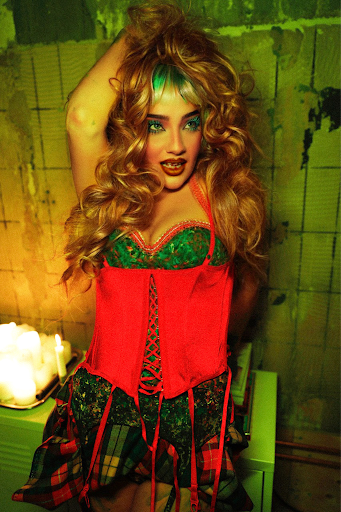
Before we wrap up, tell us what we can expect from your upcoming album debut A dying source. How do you want the listeners to feel?
R: A dying source is very organic and it has so many people that have been involved in every production and every choice that we made. It has been very conscious. We’ve been really letting it take its time, to not force [it]. I just hope that people really listen and take time to, you know, take in the whole album, not just listen to one track, because I feel like it has a red thread.
I hope that there will be people that are admiring the sound of the textures and people that are appreciating music. Like, really appreciating listening to music. Not just like this easy mainstream pop that is very like, easily melted, you know? I think this is made for people who really truly appreciate music and… everybody appreciates music in different ways, but what I mean is [people] that like to really sit down with a track and feel it and want to listen to a whole album. Because I don't think many people even have the patience these days to do that because everything has to be like, you have to feel everything now. Quick. You need a reward now, straight away. And also, I hope that people will appreciate the sonic sound of all the people that were involved in the instrumentation and production.
A dying source releases on 13th November. Be ready.

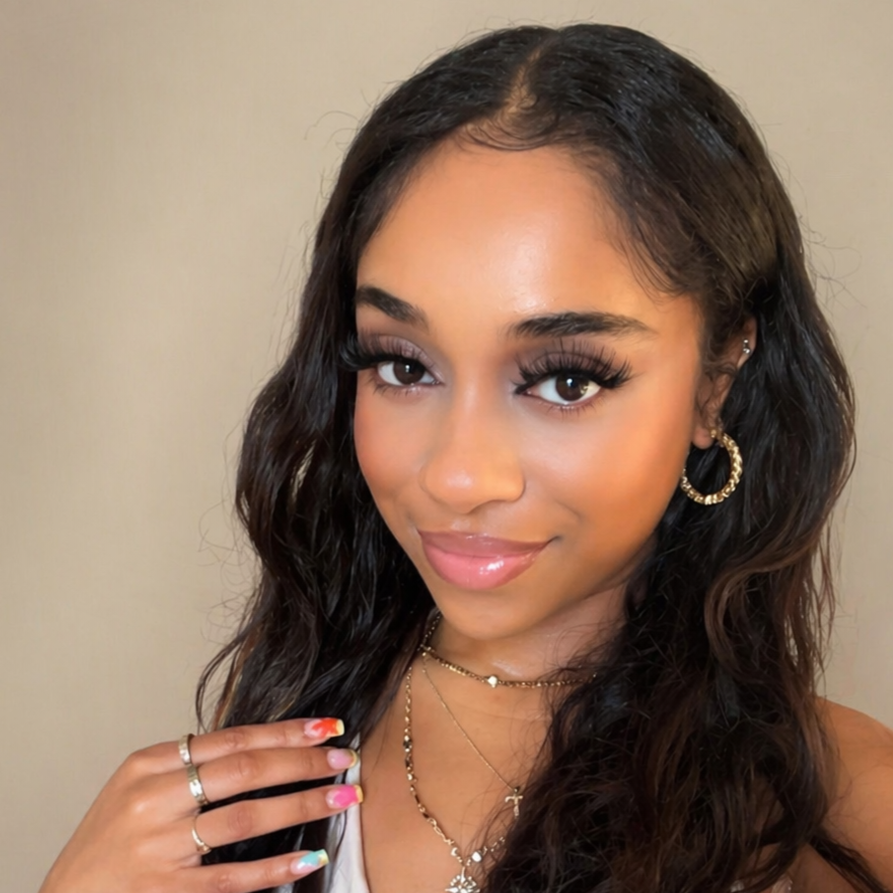
Tenai Palomino (she/her) is girlblog!’s Lifestyle Editor. She is a West Midlands-born, London-based writer, editor, and self-proclaimed pop culture fiend.
With international journalism experience and a background in fashion and culture writing, she has written extensively on emerging creatives and ideas that fuel our ever-changing cultural landscape. Having interviewed a wide range of artists, Tenai is drawn to deepening her understanding of the world through the creatives contributing to it. She continues to explore how entertainment and the media influence the way we connect and engage, while balancing her love for the latest horror releases and throwback reality TV.