By Rachel Gambling
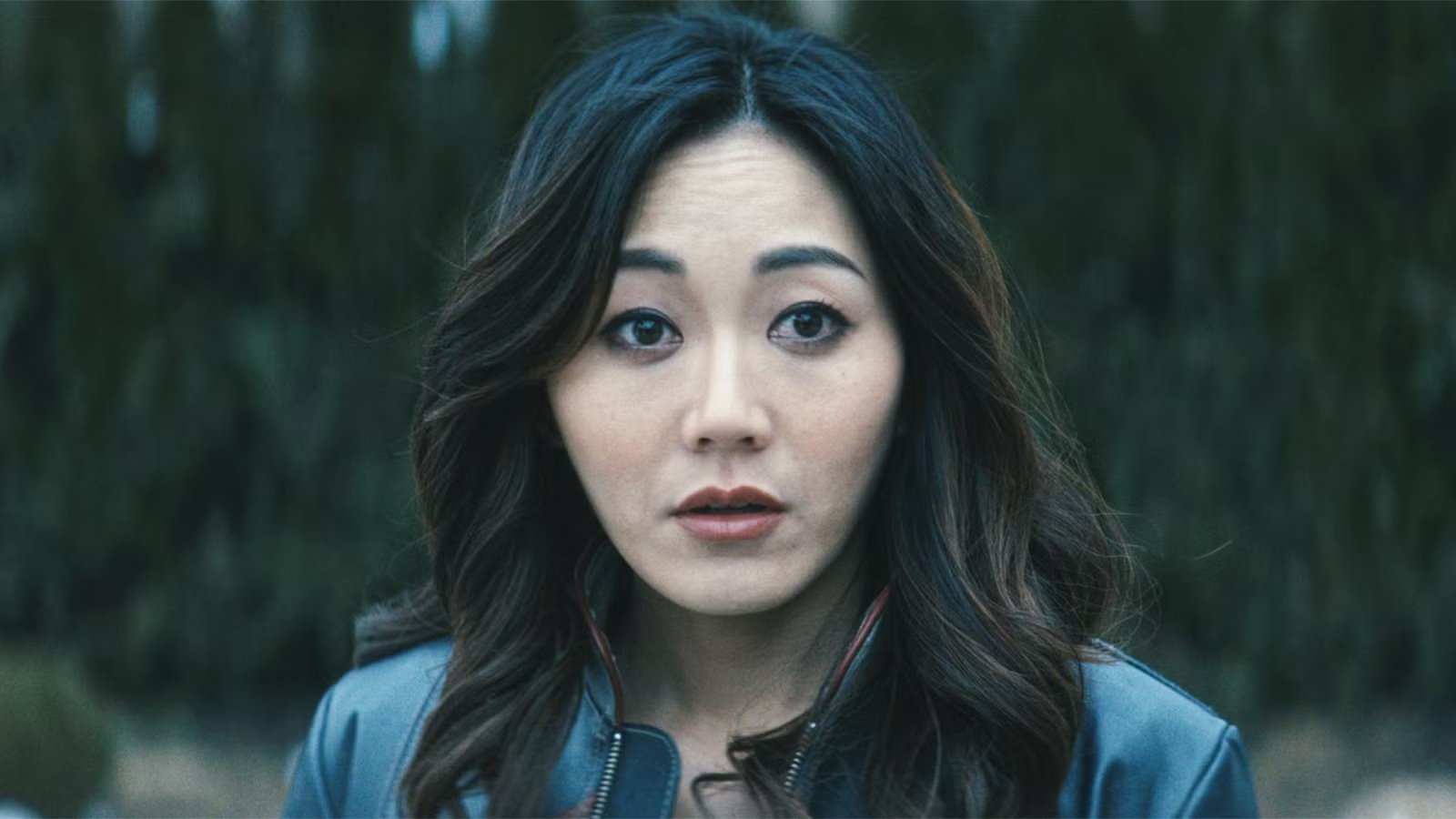
Karen Fukuhara as Kimiko Miyashiro in The Boys
"Your skin is so oily, like huggin' a McRib." I've never had a McRib before, so I didn't understand this reference. These are some of Kimiko Miyashiro's first words of dialogue in The Boys season five. We've heard her speak before; in season three, there's a musical sequence where she fantasises about being able to express herself through song. In season four, she cries out as Frenchie is kidnapped by Cate Dunlap and Sam Riordan. But her first, conscious, full sentences are spoken onscreen after a year-long time lapse, which she spent in Manila doing "speech therapy, therapy-therapy, and so much fuckin' TikTok." She often speaks in vulgar one-liners, which led to a fuckload of discourse on the aforementioned clock app.
The reactions to Kimiko's newfound voice have mostly been negative. Her dialogue has been described as "cringey" and "poorly executed," that "they should've kept her as the silent type," and one even going as far to say that this development was erasing disability for the sake of plot progression and therefore "ableist." Karen Fukuhara even said herself during an interview with CinemaBlend that "it was almost as though I was playing like a whole new character."
But The Boys has never been shy when it comes to vulgarity. More often than not I've found myself wincing at Billy Butcher's one-liners, which are purposefully delivered with an overexaggerated Cockney accent by Karl Urban -- yet people are often embracing this version of cringe and even joyfully impersonating his character on TikTok. The same goes for Solider Boy, whose crass remarks about his sexual exploits and drug abuse get endless fan edits. I don't think these are any better written than what we hear from Kimiko's mouth; so why is the reaction so different to her use of profanity?
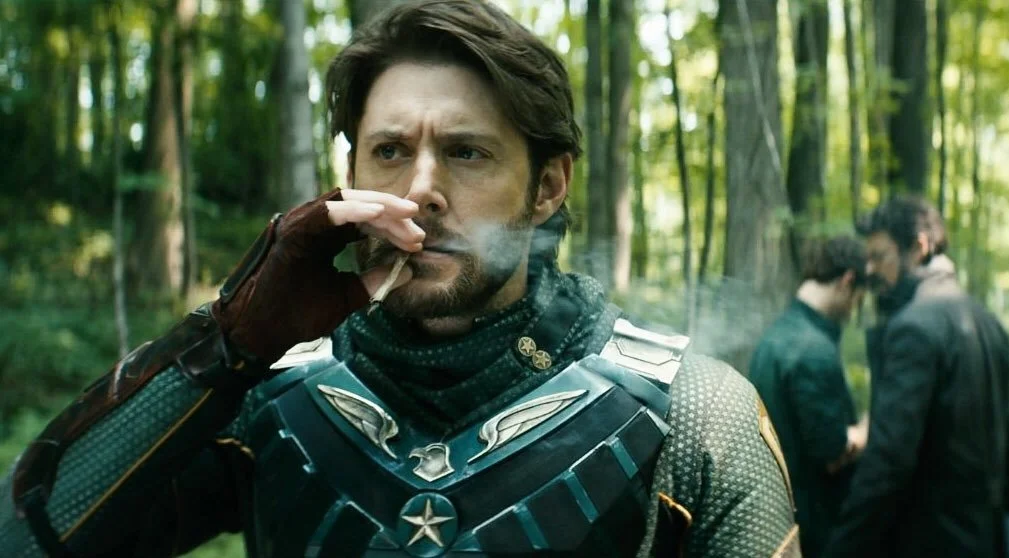
Jensen Ackles as Soldier Boy
Kimiko's story starts in the basement of a bodega. We meet her in the fourth episode of season one, 'The Female of the Species,' titled after her character's name in The Boys comic book series by Garth Ennis and Darick Robertson. Kept in a cage by Japanese gangsters, when released, her rage is unquenchable; without hesitation, she rips apart her captors and escapes into the subways of New York. When The Boys rediscover her, she soon becomes a missing piece in the puzzle of Homelander's imperialist mission: Kimiko was groomed by the Shining Light Liberation Army, a terrorist organisation provided with Compound V by Homelander to aid in the creation of foreign supervillains, reinforcing the need for superheroes and establishing their necessity in the US Military.
One of the few survivors of forced Compound V administration, Kimiko develops abilities of superhuman strength, regenerative healing, superhuman durability, hearing, close-range fighting skills, and short bursts of speed, and is quickly branded as a "weapon" by Butcher. But the murder of her parents, her time in Shining Light, the loss of her brother, and having to join the fight against Vought without much choice leaves her continually retraumatised. Being witness to this leaves her unable to express herself verbally, and instead through her own form of sign language.
Kimiko Sign Language (KSL) was developed by American Sign Language (ASL) Coach Amanada Richer, who worked closely with Karen Fukuhara to develop a unique version of communication specific to Kimiko's character. During an interview with Kristen Maldonado, Fukuhara says that KSL " was word for word. I wasn't just gibberishing the choreography of it all." A great level of thought went into the representation of Kimiko's mutism with the meaningful consultation of Richer's lived experience of disability (though it's important to note that Richer is hearing impaired and not mute).
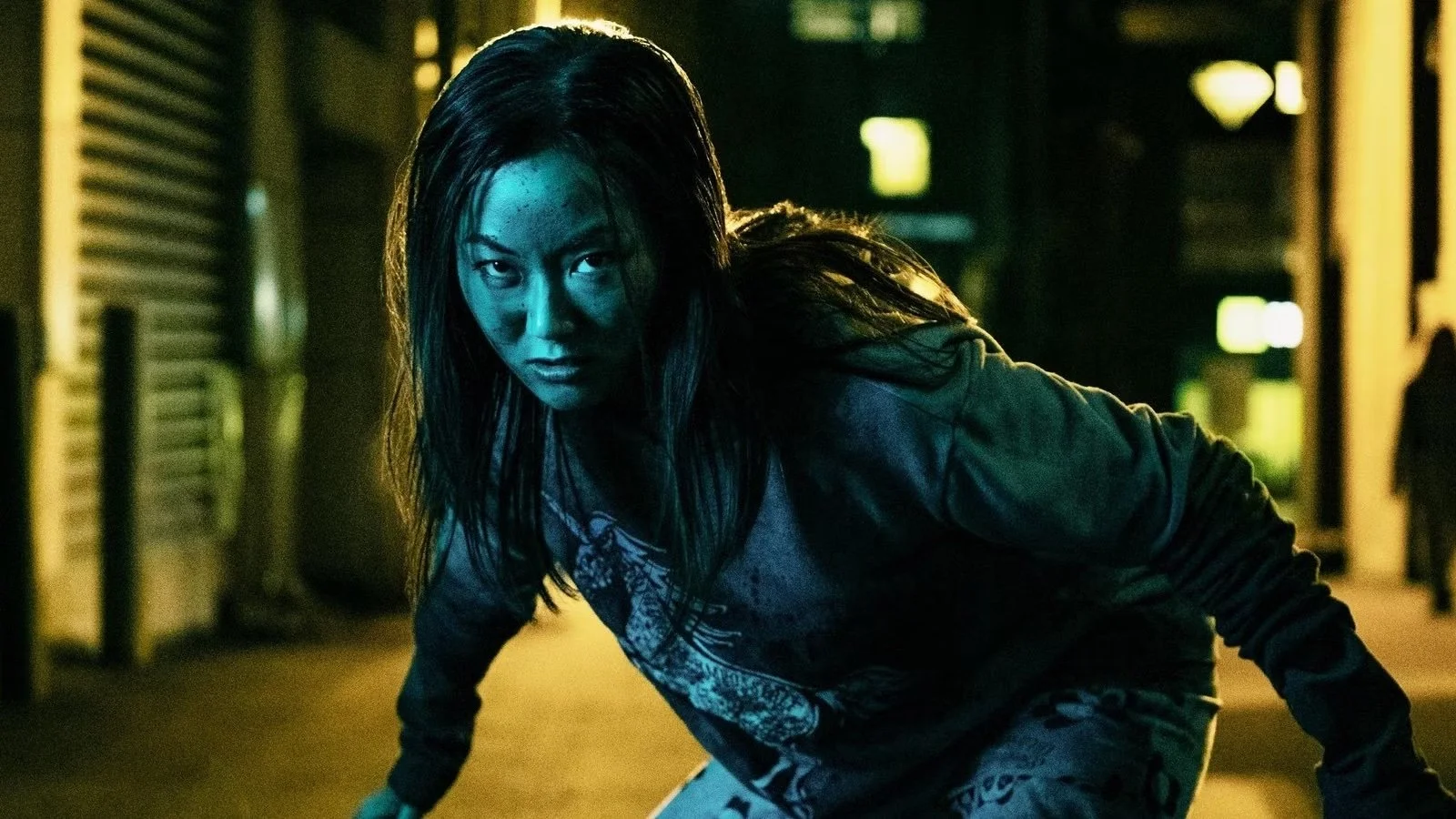
Kimiko in S1 of The Boys
Kimiko seeks her own voice throughout the course of The Boys. Often seen side-by-side with Frenchie, their dynamic is rooted in a foundation of friendship that develops into a 'will they, won't they' trope. Most significantly, Kimiko imagines herself singing an outlandish musical number alongside Frenchie during her stay in the hospital after losing her powers in a fight with Solider Boy. She's gleeful at the prospect of being able to find an identity outside of having superhuman abilities and being a "weapon" at The Boys' disposal; she desires normality, of having a movie-like romance with Frenchie where they live in a saturated paradise á la Judy Garland. But her real voice isn't shown until season four's finale, when Frenchie is subject to Cate Dunlap's mind control and forced into a Homelander-branded concentration camp. Her scream is one word, but its delivery says it all.
So, it's understandable that the emotional distress initiating this first bit of speech from Kimiko is jarring in comparison to what we hear from her at the beginning of season five: "that makes me feel angry and want to tit-slap you but also hug you." Have I ever spoken that sentence before in my life? Not to my recollection, no. I did, however, used to threaten to castrate the boys that used to pick on me at school, so it's probably not too far a stretch for my vocabulary. The explanation we're provided with is that Kimiko learned to speak through multiple types of therapy, as well as TikTok, hence the unique choice of dialogue. But viewers were left dissatisfied with this. Problems were also raised regarding the audio quality of season five's opening episode, but Kimiko's seemed particularly noticeable to audiences, with one critic describing it as "the worst ADR [automated dialogue replacement] I've ever seen in my entire life."
The ADR point is, admittedly, valid. I had the same initial reaction watching Kimiko speak, confused by this somewhat overwhelming jump from silence to word vomit. But, on reflection, and after completing the whole season, I had to reflect; was this really an entirely new personality for Kimiko? We'd already seen her describe her desire for vengeance on Stormfront in equally blunt terms: "she said she's gonna stick her boot up your Nazi kitty." Considering she hasn't had a chance to speak in what's implied to be potentially decades, having spent time with equally as vulgar men, and established her vocabulary from TikTok (which is monumentally cringeworthy, making vast amount of the criticism regarding her dialogue deeply ironic considering it comes from that exact source), I really don't think it is that far-fetched an explanation.
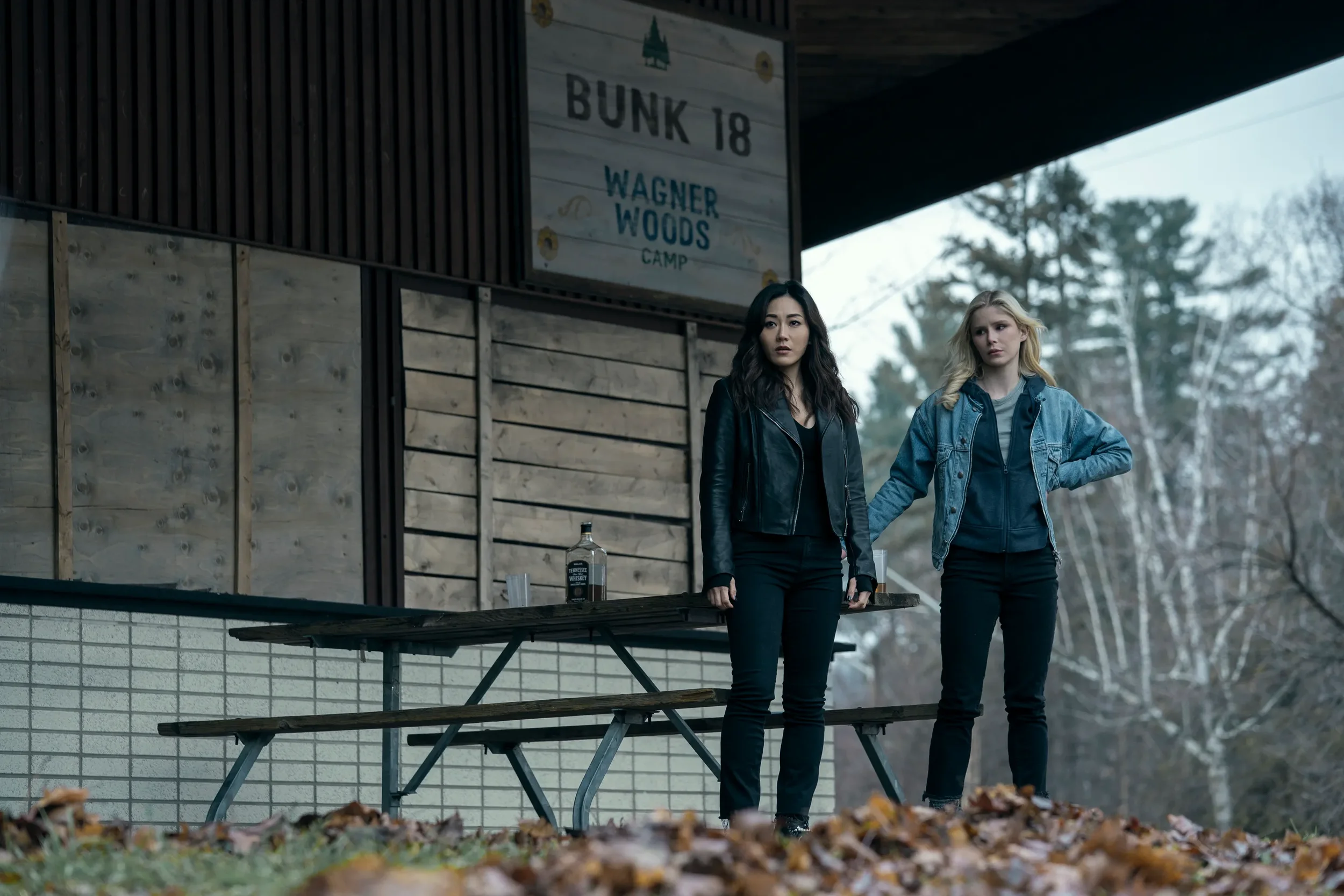
Kimiko and Starlight (Erin Moriarty) in S5 of The Boys
In season five episode six, 'Though the Heavens Fall,' Kimiko tells Golden Geisha that "seeing someone who looked like her on television meant so much." There are arguments over the continuity of this statement. If Kimiko grew up in Japan and was trapped within Shining Light, how did she access American television? Would she not have already seen Japanese people on TV as someone living in Japan? Granted, there was a fuck-up in the writers' room with that line. But my point is that personal identity is formed by the characters we see in the media and that look like us. I was always looking for a brown girl to the relate to in the cartoons I watched whether it was Alex in Totally Spies or Yasmin in Bratz. Our perceptions of self, race, and ethnicity are shaped by the media we consume.
Michelle K. Sugihara, executive director of the Coalition of Asian Pacifics in Entertainment, states that “stereotypes are extremely harmful because they affect how people think, feel and act... When it’s on our screens, and when we’re constantly bombarded with these stereotypes, it starts to change people’s perceptions and then perception leads to reality, which is why media is such an important and powerful tool." In the same article by NBCU Academy, journalist Mallory Carra notes that only around 60% of Americans are somewhat familiar with the negative stereotypes associated with AAPI (Asian American and Pacific Islander) stereotypes are rooted in historical events, according to a 2023 study by The Asian American Foundation.
Stereotypes often associated with Asians in America include the notion of the 'model minority' -- that Asians are more studious and obedient in comparison to 'rebellious' African Americans -- and the 'forever foreigner,' which Sugihara describes as being constantly seen as "an outsider... being made fun with exaggerated foreign accents." With this in mind, it brings into question whether Kimiko is viewed through this lens by The Boys' audience -- one known for misinterpreting its portrayal of fascist dictators as endorsement.
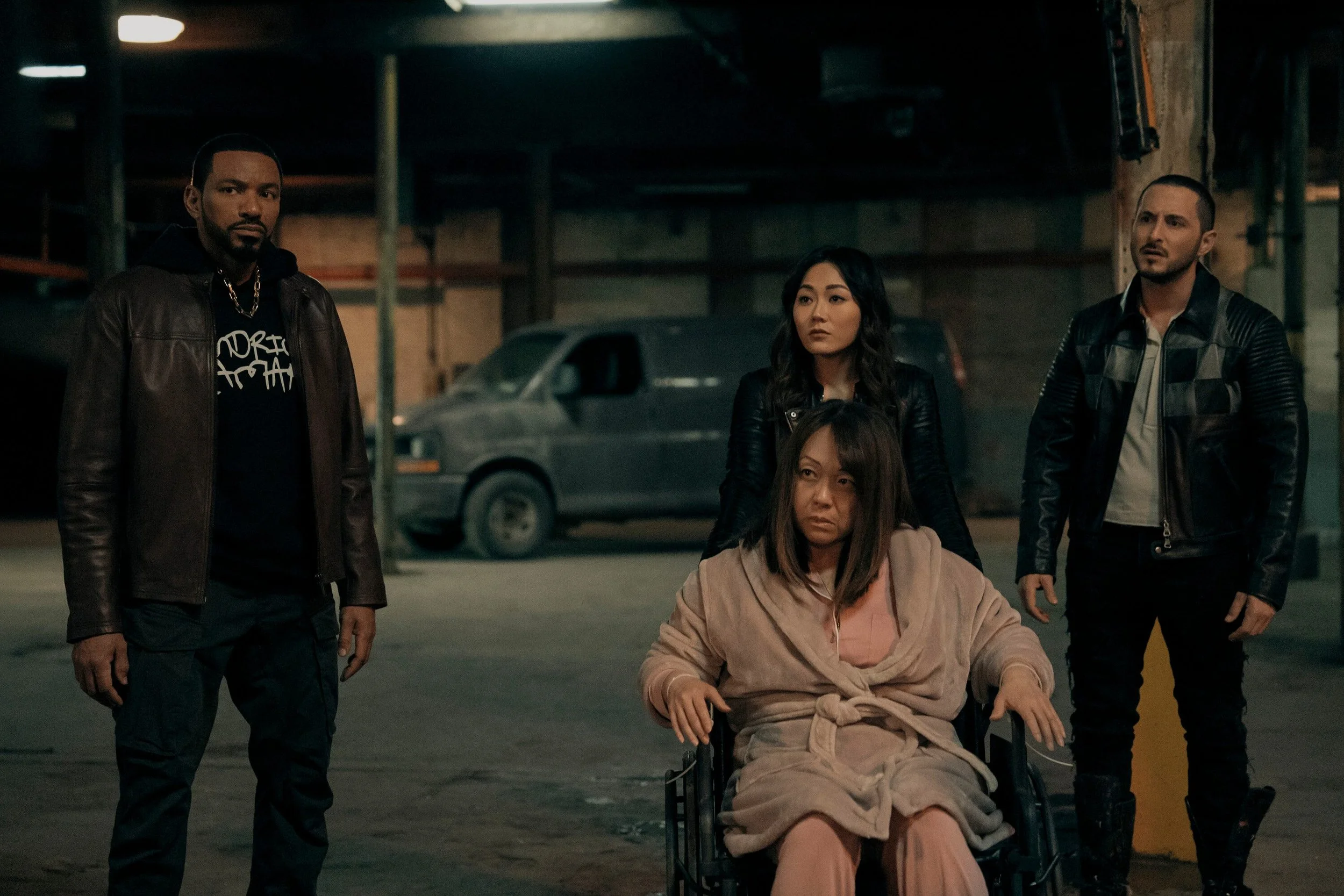
Mother’s Milk (Laz Alonso), Kimiko, and Frenchie (Tomer Capone) kidnap Golden Geisha (Naoko Mori)
Kimiko is more in line with the idea of "non-European 'savages,'" when we meet her in season one, a stereotype highlighted in research by Jeffrey Levick for Stanford University SPICE. In American media, Japanese people are often reduced to "paradox-quasi savages prone to politeness and valor." Being caged, remaining silent, sacrificing her wellbeing to protect Frenchie, aligns with characteristics of the "samurai spirit" and "dogged persistence" associated with the image of the Japanese warrior.
But as Kimiko's character builds a stronger sense of self, her new dimensions bring her further away from these harmful ideas. That's part of the reason why Kimiko's ability to speak becomes less of a lazy writing decision, and more of a necessary progression for her character arc. “It felt like she’s been evolving in terms of letting go of the trauma that caused her mutism in the first place,” said The Boys showrunner Eric Kripke. "And she’s been working so hard to deal with it, that it felt right to then take her to the next step, which is she does get her physical voice back.”
Fukuhara too, agrees that Kimiko's dialogue is a necessary step for her character:
...with her lines this season, there's a lot of humorous ones. I feel lucky in that she was given these lines because she's always been with the funniest character, in my opinion, on the show... so it was really fun to tackle that new side of her this season.
One gripe raised about the sexually explicit jokes provided by Kimiko this season was that it "feels like a fetishisation." This is a valid concern -- there's a complicated culture regarding the hypersexualisation of women in Japan, as well as the sexual assault of underage girls within manga and anime. Tokyo-based writer Annemarie Luck spoke with members of the artists collective Tomorrow Girls Troop, who fight against gender inequality in Japan, about the sexual expectations of Japanese women and how they "are expected to prance around seductively in bikinis and schoolgirl uniforms when performing for men." Yet, "if ever they transgress their contractual boundaries, they face grave consequences."
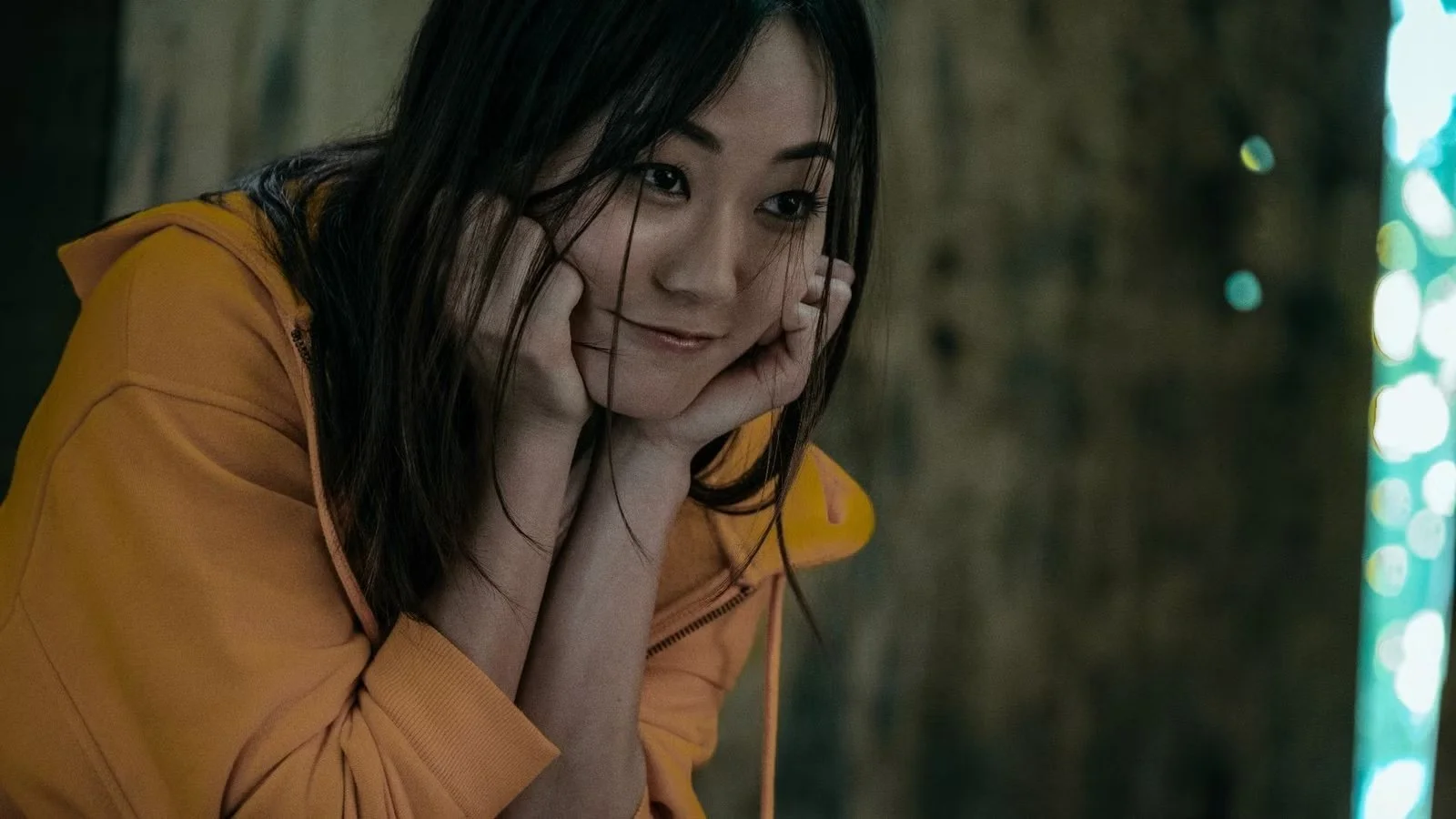
Karen Fukuhara as Kimiko
Kimiko doesn't shy away from her sexual desires; her brazen accounts of her prolific pornographic viewing habits don't align with the timid, sexually inexperienced yet desperate desire portrayed in schoolgirl hentai. There's a lack of social awareness in the way these lines are written into scenes, and yes, this could be attributed to poor execution, but this has always existed in The Boys. It's always been a show littered with schoolboy humour. So, the fact that now people have an issue with it coming from an Asian woman's mouth is very telling of the audience's critical thinking skills. Dr. Wendy Patrick cites research in Psychology Today that found insecure men are more likely to "believe in dated concepts such as 'ladylike women don’t use bad language.'" This, rolled together with the idea of Asians acting as a "model minority," and the "grave consequences" that face Asian women acting on their sexuality on their own accord, provides a telling insight into why Kimiko's vulgar dialogue is met with a higher level of criticism than Butcher's or Solider Boy's. It's also far more palatable for a woman to remain silent and beautiful than to defy 'ladylike' expectations; consider how Starlight actor Erin Moriarty is criticised for her appearance.
In a recent interview with Timid Magazine, Fukuhara expresses her love for Kimiko's frank speech:
What I love about Kimiko is that she has no filter. Being in survival mode for so long, she has no room for ambiguity. Every time she communicates, she's completely genuine. She never sugarcoats anything and remains true to her feelings and beliefs, even when things don't go her way. I admire her for always speaking her truth.
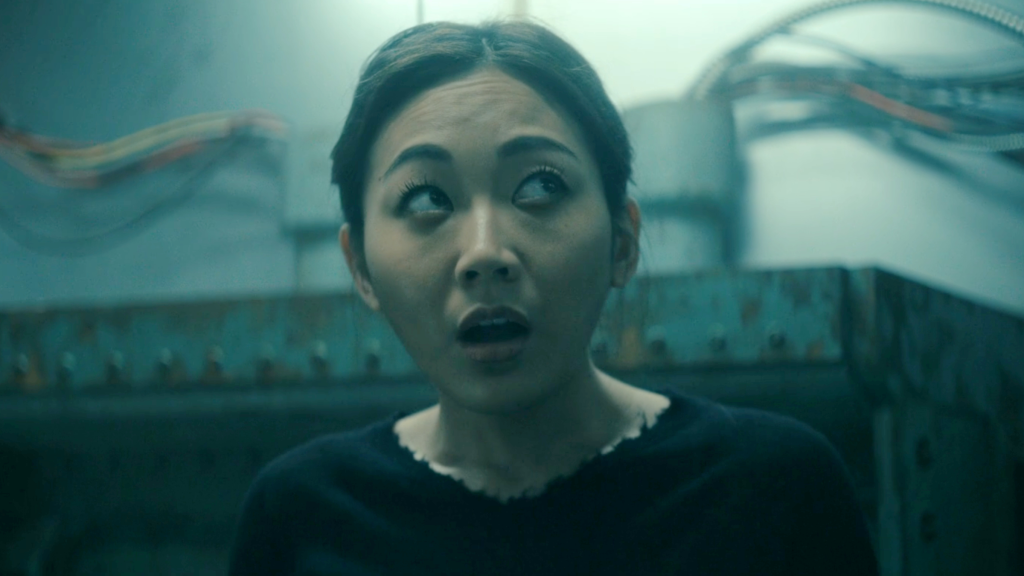
Kimiko takes on deadly radiation in S5 of The Boys
Kimiko's story ends with her stripping Homelander of his powers. After a long, trying season of searching for V1, hearing next to nothing from the Gen V crew, and seeing Solider Boy put on ice for a second time around, we see Kimiko sacrifice her life to undergo deadly levels of radiation in order to blast Homelander into humanity. Her life, which previously revolved around Frenchie, is now her own. As Fukuhara told Timid Magazine herself:
Asians haven't always been portrayed positively in the past, so being a part of projects where I align with the character's beliefs or the show's social commentary is truly fulfilling.
I feel the same. Kimiko is given her own voice, her own Bernedoodle, her own tasty madeleine in a French café. Her development, whilst yes, may not the strongest in terms of continuity, is still satisfying. She doesn't die with a samurai spirit or return to her rageful ways. She finds her own, albeit imperfect, peace.

Rachel Gambling is a writer and poet from Southend-on-Sea, UK. She has a lot of thoughts on some things. She is the Founder and Editor-in-Chief of girlblog! a Riot Grrrl arts and culture webzine providing an intersectional perspective on film, TV, music, and lifestyle.
Her poetry has been published in T'Art, Queerlings, Where the Land Forgets Itself, and Kamena, and her self-published pamphlet, Cape Point, was part of the 2025 Estuary Anthology. She has written content for Cliterally the Best, Brook, JustWatch, and The Socialist. She currently works full-time for a sexual health charity.